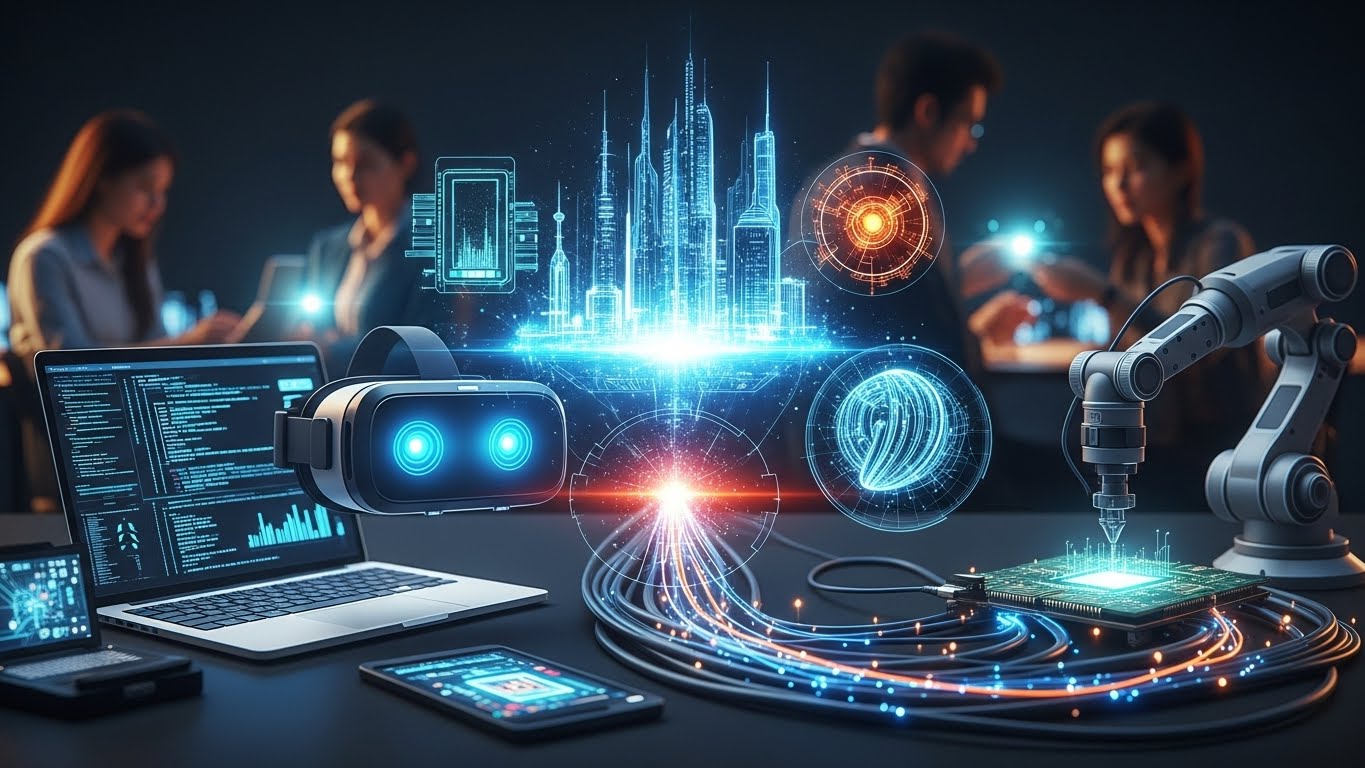

Technology has always been at the forefront of human progress, constantly evolving to meet the needs of society. From the earliest tools used by humans to the groundbreaking advancements of today, technology has played an essential role in shaping civilization. But the future of tech promises to be more transformative than ever before. With the rapid development of artificial intelligence, quantum computing, biotechnology, and other emerging fields, the way we live, work, and interact is set to change dramatically. In this blog post, we will explore some of the most exciting innovations in technology and how they are poised to redefine our world.
The Age of Artificial Intelligence
Artificial intelligence (AI) is undoubtedly one of the most influential and rapidly advancing fields in technology today. What was once the stuff of science fiction is now a tangible reality, and AI is already being integrated into many aspects of our daily lives. From voice assistants like Siri and Alexa to self-driving cars, AI is transforming industries, improving efficiencies, and enhancing customer experiences.
At the core of AI’s development is machine learning (ML), a subset of AI that enables machines to learn from data and improve their performance over time without being explicitly programmed. This allows AI systems to recognize patterns, make decisions, and even predict outcomes. For example, AI is being used in healthcare to predict patient outcomes, in finance for fraud detection, and in retail to personalize shopping experiences.
Looking ahead, AI’s potential is boundless. In the future, AI is expected to play a central role in solving some of the world’s most pressing challenges, such as climate change, disease prevention, and resource management. As AI systems become more sophisticated, they will likely become critical tools in fields like medicine, education, and transportation, driving innovation and creating new opportunities for businesses and individuals alike.
Quantum Computing: The Next Frontier
Quantum computing is another emerging technology that has the potential to revolutionize industries and solve complex problems that are currently beyond the capabilities of classical computers. Unlike traditional computers, which use bits to process information in binary form (0s and 1s), quantum computers use quantum bits, or qubits, that can exist in multiple states simultaneously, thanks to the principles of quantum mechanics.
This ability to process vast amounts of data at once allows quantum computers to tackle problems that would take classical computers millions of years to solve. For example, quantum computing could be used to simulate complex chemical reactions, design more efficient materials, optimize supply chains, and even improve cryptography. While quantum computers are still in the early stages of development, companies like IBM, Google, and Microsoft are making significant strides in this field.
In the coming years, quantum computing could lead to breakthroughs in medicine, energy, and materials science, among other fields. For instance, quantum simulations could enable the discovery of new drugs or the development of cleaner, more efficient energy sources. Although it may take time before quantum computers become widely accessible, their potential to transform industries is immense, and the race to unlock their full potential is on.
Biotechnology and Genetic Engineering
Biotechnology is another area of tech that is advancing at an exponential rate. The ability to manipulate biological systems at the molecular and genetic levels is opening up new frontiers in medicine, agriculture, and environmental sustainability. Gene editing technologies like CRISPR-Cas9 are making it possible to modify DNA with unprecedented precision, allowing scientists to potentially cure genetic diseases, improve crop yields, and create more sustainable food sources.
In healthcare, biotechnology is already playing a key role in personalized medicine. By using genetic data, doctors can tailor treatments to individual patients, ensuring that they receive the most effective therapies with the fewest side effects. Additionally, biotechnological advances have led to the development of innovative therapies, such as immunotherapies for cancer, and have the potential to address challenges like antibiotic resistance and aging.
The agricultural sector is also benefiting from biotechnology, with genetically modified crops offering increased resistance to pests, diseases, and environmental stresses. These innovations could help ensure food security as the global population continues to grow and climate change affects crop yields. Additionally, biotech companies are exploring the possibility of lab-grown meat, which could provide a more sustainable and ethical alternative to traditional animal farming.
As biotechnology continues to advance, the ethical and societal implications of genetic manipulation will be important considerations. While the potential benefits are vast, there will be ongoing debates about the boundaries of genetic engineering and the responsible use of these technologies.
The Rise of 5G and the Internet of Things
5G, the fifth generation of wireless technology, is expected to be a game-changer for many industries. With faster speeds, lower latency, and greater capacity than its predecessors, 5G promises to unlock new possibilities for connectivity and communication. This next-generation network will enable the seamless integration of devices, creating a hyper-connected world where everything from smartphones to autonomous vehicles is interconnected.
One of the key applications of 5G is the expansion of the Internet of Things (IoT), which refers to the network of physical devices that are connected to the internet and can communicate with each other. IoT devices, such as smart home products, wearables, and industrial sensors, are already becoming increasingly common. With the advent of 5G, the potential for IoT will grow exponentially. For instance, in healthcare, IoT-enabled devices could monitor patients in real-time, providing doctors with critical data to make more informed decisions. In smart cities, IoT can be used to optimize traffic flow, reduce energy consumption, and improve public safety.
The combination of 5G and IoT also holds promise for industries like manufacturing, logistics, and agriculture. Real-time data collection and analysis could lead to smarter supply chains, more efficient production processes, and improved resource management. As 5G networks become more widespread, the possibilities for innovation will only expand, enabling a truly connected world.
Autonomous Vehicles: Redefining Transportation
Self-driving cars are no longer a futuristic concept—they are already on the roads, with companies like Tesla, Waymo, and Uber testing autonomous vehicles in various cities around the world. The development of autonomous vehicles has the potential to revolutionize transportation, making it safer, more efficient, and more sustainable.
Self-driving cars rely on a combination of sensors, cameras, and artificial intelligence to navigate the roads, detect obstacles, and make decisions in real-time. By eliminating the need for human drivers, autonomous vehicles could reduce traffic accidents, minimize congestion, and lower carbon emissions. In addition, self-driving cars could lead to greater mobility for individuals who are unable to drive due to age or disability.
While there are still significant regulatory and technological challenges to overcome, the future of autonomous vehicles looks promising. In the coming years, we can expect to see more self-driving cars on the roads, along with the development of autonomous delivery services and even flying cars. As this technology matures, it will have a profound impact on the automotive industry, urban planning, and transportation infrastructure.
The Ethical Considerations of Emerging Technologies
As technology continues to advance at a rapid pace, it is important to consider the ethical implications of these innovations. Issues such as data privacy, AI bias, cybersecurity, and the potential for job displacement due to automation are all critical concerns that need to be addressed. While emerging technologies offer tremendous potential for progress, they also present challenges that require careful thought and regulation.
For instance, the rise of AI has raised concerns about the potential for algorithmic bias, where machines may inadvertently reinforce existing prejudices or discriminate against certain groups. Similarly, the widespread collection of personal data by IoT devices and AI systems poses privacy risks that must be managed to protect individuals’ rights.
Moreover, the automation of jobs through AI and robotics could lead to significant shifts in the workforce. While these technologies may increase productivity, they may also displace workers in certain sectors, raising questions about the future of employment and the need for retraining and reskilling programs.
To ensure that technological advancements benefit society as a whole, it is crucial for policymakers, businesses, and technology developers to work together to create frameworks that promote responsible innovation. By addressing these ethical considerations, we can ensure that the future of tech is both transformative and equitable.
Conclusion
The future of technology is incredibly exciting, with innovations in artificial intelligence, quantum computing, biotechnology, and other fields set to reshape the world in ways we can hardly imagine. These technologies have the potential to solve some of humanity’s greatest challenges, from healthcare and sustainability to transportation and connectivity. However, as we move forward, it is important to consider the ethical implications of these advancements and work together to ensure that they benefit all of humanity. As we stand on the cusp of a new technological era, the possibilities are limitless, and the future is brighter than ever.