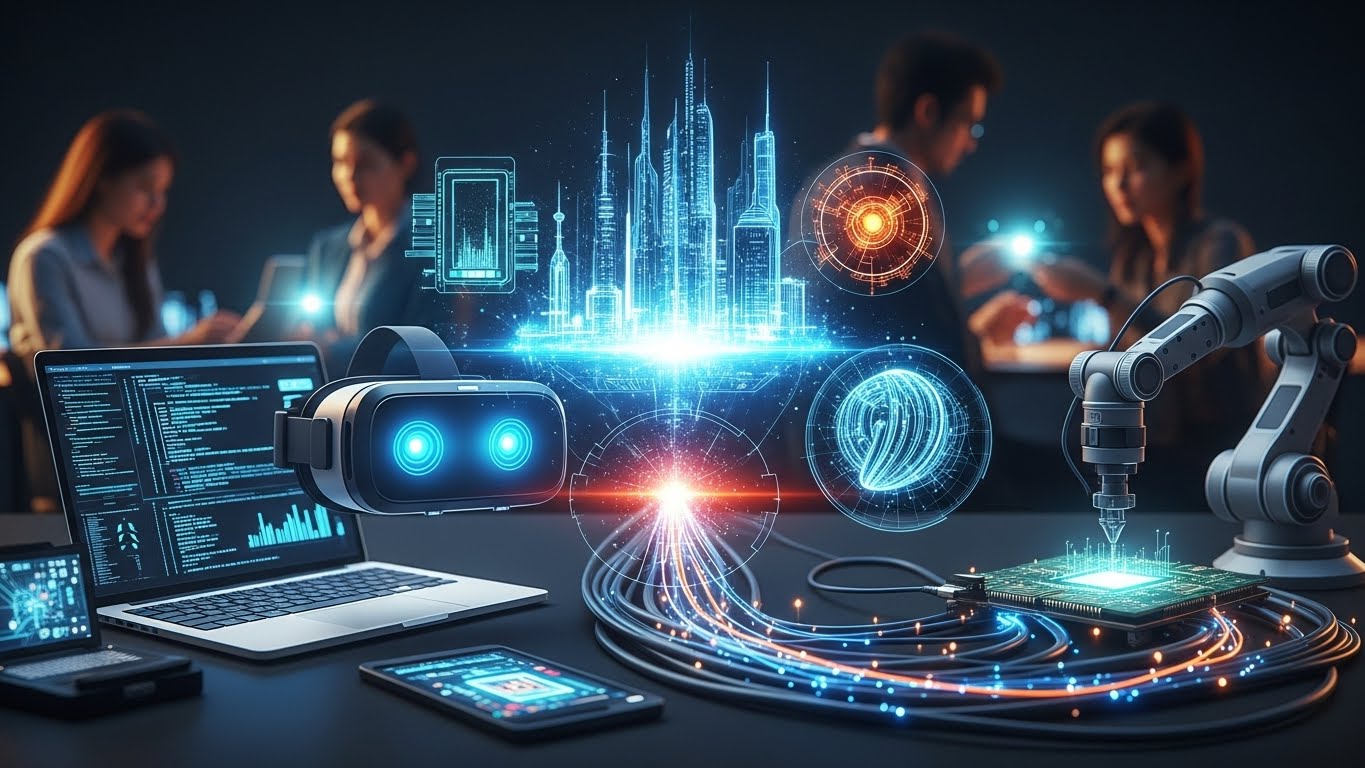

In today’s fast-paced world, technology is not just a tool we use—it’s a driving force behind nearly every aspect of our lives. From the way we communicate to the way we work, learn, and even shop, technology has transformed the fabric of modern society. But the question remains: what does the future of technology hold? With advancements in artificial intelligence, quantum computing, the Internet of Things, and more, it’s clear that we’re only scratching the surface of what’s possible. This blog post delves into the transformative power of technology, exploring the trends and innovations that will define the future and the implications they have on our daily lives.
The Rise of Artificial Intelligence: A New Era
Artificial Intelligence (AI) is arguably one of the most exciting and talked-about developments in the tech world. With the ability to simulate human intelligence, AI is transforming industries ranging from healthcare to entertainment. AI systems can now learn, adapt, and make decisions based on data, allowing them to perform tasks that were once the exclusive domain of humans.
In healthcare, AI is being used to analyze medical data, diagnose conditions, and even recommend treatment plans. Machine learning algorithms can sift through vast amounts of patient data, identifying patterns that might go unnoticed by human doctors. In industries like manufacturing, AI-driven robots and automation systems are increasing efficiency, reducing costs, and improving safety.
But what about the future? As AI continues to evolve, we can expect even more advanced applications. Self-driving cars, personalized medicine, and smart cities are just a few of the possibilities that AI will help bring to life. In fact, some experts predict that AI will revolutionize entire industries, leading to innovations that could solve some of humanity’s most pressing problems, such as climate change and disease control.
Quantum Computing: The Next Frontier
Quantum computing is another emerging technology with the potential to change the world as we know it. While traditional computers rely on bits to process information (0s and 1s), quantum computers use quantum bits, or qubits, which can represent both 0 and 1 simultaneously. This unique property, known as superposition, allows quantum computers to perform calculations at speeds that are exponentially faster than today’s best supercomputers.
What makes quantum computing so revolutionary is its ability to solve complex problems that would take traditional computers millions of years to crack. For instance, quantum computers could be used to simulate the behavior of molecules, allowing scientists to discover new drugs, materials, and even clean energy solutions. In the realm of cryptography, quantum computers could break existing encryption methods, leading to the development of new, more secure ways of protecting sensitive information.
Though quantum computing is still in its early stages, researchers are making significant strides toward building practical quantum computers. Once fully realized, quantum computing could unlock a new era of scientific discovery and technological progress, with applications in everything from artificial intelligence to climate modeling.
The Internet of Things: Connecting Everything
The Internet of Things (IoT) is transforming the way we interact with the world around us by connecting everyday objects to the internet. From smart homes to wearable devices, IoT allows objects to send and receive data, creating a more connected and efficient world.
In smart homes, IoT-enabled devices like thermostats, lights, and security cameras can be controlled remotely via smartphones or voice assistants. This level of automation and control makes life more convenient and energy-efficient. For example, smart thermostats can learn your schedule and adjust the temperature in your home based on your preferences, saving both energy and money.
In the industrial sector, IoT is revolutionizing supply chains and manufacturing processes. Sensors placed on equipment can monitor performance in real-time, alerting workers to potential issues before they lead to costly breakdowns. In agriculture, IoT devices can track soil moisture levels, weather patterns, and crop health, enabling farmers to optimize yields and reduce waste.
Looking ahead, the IoT ecosystem will continue to expand as more devices become interconnected. The next generation of IoT will be driven by advancements in 5G networks, which will provide the speed and low latency required for real-time communication between devices. As IoT becomes more integrated into our daily lives, it has the potential to improve everything from healthcare to transportation, creating a smarter, more efficient world.
The Evolution of 5G: A Connected Future
5G, the fifth generation of mobile networks, is poised to revolutionize how we communicate and interact with the world. With speeds up to 100 times faster than 4G, 5G promises to deliver ultra-fast internet, low latency, and massive connectivity, enabling new technologies like autonomous vehicles, remote surgery, and smart cities.
The most exciting aspect of 5G is its ability to support massive numbers of connected devices at once. With the proliferation of IoT, this capability will be crucial in ensuring that everything from smart homes to industrial equipment can communicate seamlessly. For example, 5G will make it possible for self-driving cars to communicate with each other in real time, reducing the risk of accidents and improving traffic flow.
In healthcare, 5G will enable telemedicine to reach new heights, allowing doctors to perform remote surgeries with robotic precision or monitor patients in real time using wearable devices. In entertainment, 5G will provide the bandwidth necessary to stream high-definition content, including 4K and 8K videos, directly to devices without buffering or lag.
As 5G networks continue to roll out worldwide, the technology will unlock new possibilities for industries, businesses, and individuals, creating a more connected and efficient world.
Biotechnology and Tech Convergence: Shaping the Future of Health
The convergence of biotechnology and technology is ushering in a new era of medical innovation. From gene editing to personalized medicine, advancements in tech are making it possible to treat diseases in ways that were once thought to be science fiction.
One of the most promising developments is CRISPR, a gene-editing technology that allows scientists to modify DNA with unprecedented precision. CRISPR has the potential to cure genetic diseases, eliminate certain types of cancer, and even prevent hereditary conditions before birth. As this technology matures, it could lead to a future where genetic disorders are a thing of the past.
In the realm of personalized medicine, tech is making it possible to tailor treatments to individual patients based on their genetic makeup, lifestyle, and environment. Wearable devices that monitor health metrics in real time are providing valuable insights into a person’s well-being, allowing for early intervention and personalized treatment plans. With AI analyzing vast amounts of medical data, doctors can make more accurate diagnoses and recommend the most effective treatments.
As the line between biotechnology and technology continues to blur, the healthcare industry will be transformed, leading to longer, healthier lives and improved outcomes for patients around the world.
Virtual Reality and Augmented Reality: Redefining Experiences
Virtual Reality (VR) and Augmented Reality (AR) are two technologies that have the potential to revolutionize entertainment, education, and even work. While VR immerses users in a completely digital environment, AR overlays digital elements onto the real world, enhancing how we perceive our surroundings.
In entertainment, VR is already being used to create immersive gaming experiences, where players can step into virtual worlds and interact with their environment in ways never before possible. AR, on the other hand, is transforming how we experience the world around us. Apps like Pokémon Go have popularized AR gaming, and businesses are beginning to use AR to enhance shopping experiences by allowing customers to “try on” products virtually.
In education, VR and AR are being used to create interactive learning experiences. Medical students, for example, can practice surgeries in a virtual environment, gaining valuable hands-on experience without the risk of harm. AR can be used to provide real-time information in educational settings, allowing students to explore historical sites or conduct scientific experiments with the help of virtual objects.
Looking ahead, VR and AR will continue to evolve, offering new ways to learn, work, and play. As hardware improves and the cost of these technologies decreases, VR and AR will become more accessible, unlocking a world of possibilities for users of all ages.
The Ethics of Technology: Navigating the Future Responsibly
As technology advances, it’s important to consider the ethical implications of these innovations. From privacy concerns to the potential for job displacement, new technologies present challenges that need to be addressed.
For instance, AI and automation have the potential to replace many jobs, particularly in industries like manufacturing and transportation. While this could lead to greater efficiency, it also raises questions about how displaced workers will be retrained for new roles. Similarly, the collection of personal data by tech companies has raised concerns about privacy and the security of sensitive information.
As we continue to innovate, it’s essential that we consider the ethical implications of these technologies and develop frameworks to ensure they are used responsibly. This includes developing policies that protect privacy, promote fairness, and ensure equitable access to technology.
Conclusion: A Future Shaped by Innovation
The future of technology is bright, full of possibilities that will redefine the way we live, work, and interact. From AI and quantum computing to biotechnology and VR, technology is transforming every facet of our lives. While there are certainly challenges to overcome, such as ethical concerns and the need for responsible innovation, the potential benefits are enormous.
As we look to the future, it’s clear that technology will continue to drive progress, solve complex problems, and create new opportunities. The key to unlocking this potential lies in our ability to adapt, innovate, and use technology to create a better world for all. The future is not just something that will happen—it’s something we are building, today.