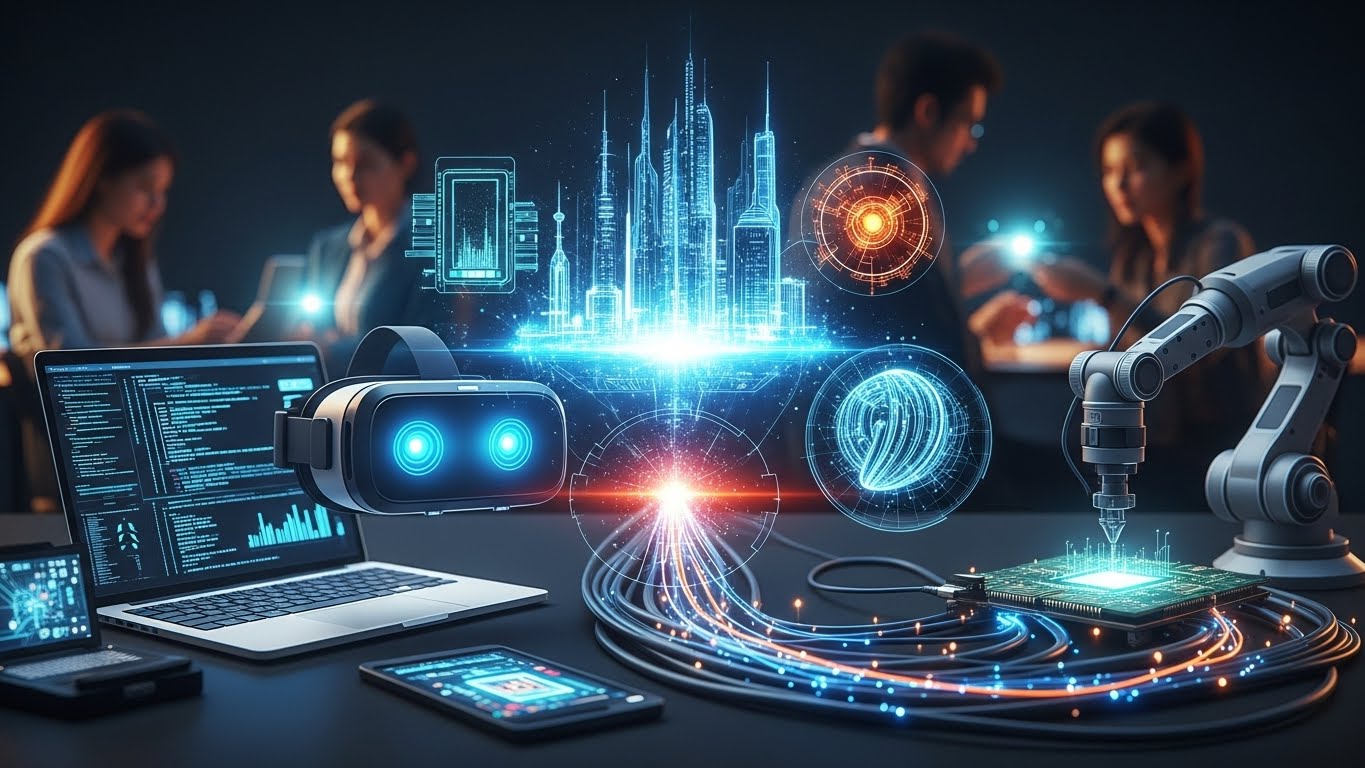

Introduction: Technology as a Catalyst for Change
Technology has become the backbone of modern society, influencing nearly every aspect of our lives. From communication and transportation to healthcare and education, technological advancements have transformed the way we live, work, and interact with the world. What began as simple tools to solve basic human problems has evolved into complex systems that drive innovation, connectivity, and economic growth. This blog explores the multifaceted role of technology, its benefits, challenges, and its profound impact on the future.
The Evolution of Technology
The history of technology is a story of human ingenuity and adaptation. Early inventions like the wheel, fire, and basic tools enabled humans to survive and thrive. The Industrial Revolution marked a pivotal shift, introducing machinery, steam engines, and mass production techniques that transformed societies.
In the 20th century, technological growth accelerated dramatically with the invention of computers, the internet, and mobile devices. These innovations laid the groundwork for a digital age where information could be shared instantly, work could be performed remotely, and global communication became seamless. Today, emerging technologies such as artificial intelligence, robotics, and quantum computing are redefining the boundaries of what is possible.
The Impact of Technology on Daily Life
Technology touches almost every aspect of daily life. Communication has become instantaneous through smartphones, social media, and messaging platforms. Tasks that once required hours or days can now be completed within minutes using smart devices and automation.
In the home, smart technology enhances convenience and efficiency. Devices like smart thermostats, voice-activated assistants, and automated appliances allow people to manage their environment with ease. Transportation has also benefited, with electric vehicles, GPS navigation, and ride-sharing services improving safety, accessibility, and sustainability. Even leisure activities, from gaming to streaming entertainment, are powered by technological innovation.
Technology in Education
The educational sector has undergone a significant transformation due to technology. E-learning platforms, virtual classrooms, and online resources have made education more accessible and flexible. Students can now access a wealth of knowledge from anywhere in the world, breaking down traditional barriers of geography and socio-economic status.
Interactive tools like digital simulations, educational apps, and virtual reality experiences enhance learning by making abstract concepts tangible. Technology also supports teachers by providing tools for assessment, feedback, and personalized instruction. The integration of technology in education is shaping a generation of learners equipped with skills for the digital era.
The Role of Technology in Healthcare
Healthcare has been revolutionized by technological advancements. Medical devices, diagnostic tools, and telemedicine platforms have improved patient care, accuracy, and accessibility. Wearable devices monitor vital signs, track physical activity, and alert users to potential health issues in real time.
Artificial intelligence assists in diagnosing diseases, analyzing medical images, and predicting patient outcomes. Robotics aids in complex surgeries, reducing risks and recovery times. Telehealth has made healthcare services more convenient, allowing patients to consult specialists from the comfort of their homes. Technology continues to push the boundaries of medical research, offering hope for treatments and cures that were once unimaginable.
Artificial Intelligence and Machine Learning
Artificial intelligence (AI) and machine learning (ML) are at the forefront of technological innovation. AI enables machines to perform tasks that typically require human intelligence, such as problem-solving, decision-making, and language processing. Machine learning allows systems to learn from data, improving their performance over time.
Applications of AI and ML span multiple industries. In finance, they optimize investment strategies and detect fraudulent activities. In transportation, autonomous vehicles rely on AI for navigation and safety. In healthcare, predictive algorithms assist in early diagnosis and personalized treatment plans. AI is also shaping entertainment, retail, and customer service, making experiences more personalized and efficient.
Technology in Business and Industry
Technology has transformed the business landscape, enabling companies to operate more efficiently, reach global markets, and innovate continuously. Automation streamlines repetitive tasks, freeing human resources for creative and strategic work. Data analytics provides insights into consumer behavior, helping businesses make informed decisions.
E-commerce platforms allow businesses to sell products and services online, reaching customers worldwide. Cloud computing offers scalable storage and computing power, enabling startups and established enterprises to operate without heavy infrastructure costs. Digital marketing leverages technology to target audiences more precisely, enhancing engagement and revenue generation. Technology is not only changing how businesses operate but also redefining entire industries.
The Influence of Technology on Communication
Communication has been perhaps the most visibly transformed by technology. Social media platforms, instant messaging apps, and video conferencing tools have made it possible to connect with people across the globe instantly. Information sharing is faster and more efficient, influencing everything from politics to personal relationships.
However, technological communication also presents challenges. The spread of misinformation, cyberbullying, and digital addiction are concerns that society must address. Despite these challenges, technology continues to provide unprecedented opportunities for connection, collaboration, and the exchange of ideas.
Environmental and Sustainability Applications
Technology also plays a critical role in addressing environmental challenges. Renewable energy solutions, such as solar panels, wind turbines, and energy storage systems, are reducing reliance on fossil fuels. Smart grids optimize energy distribution and consumption, while sensors and monitoring systems help track pollution and resource usage.
Agricultural technology improves crop yields and reduces waste through precision farming, automated irrigation, and genetically optimized crops. Environmental modeling and AI analytics aid in predicting climate change impacts, allowing governments and organizations to make informed decisions. Technology empowers humanity to tackle environmental issues with innovative, sustainable solutions.
Challenges and Ethical Considerations
While technology offers immense benefits, it also raises ethical and societal challenges. Privacy concerns are paramount as personal data is collected, stored, and analyzed at unprecedented scales. Cybersecurity threats, including hacking, identity theft, and cyberattacks, pose significant risks to individuals, businesses, and governments.
The rise of AI and automation also generates debates about job displacement, economic inequality, and decision-making ethics. Society must balance technological progress with responsible governance, regulation, and ethical frameworks. Ensuring that technology serves humanity, rather than controlling or marginalizing it, is an ongoing challenge that requires thoughtful consideration.
The Future of Technology
The future of technology is both exciting and transformative. Emerging innovations such as quantum computing, advanced robotics, augmented reality, and biotechnology promise to redefine industries and human experiences. Integration of AI across various sectors will enable smarter cities, more efficient healthcare, and unprecedented scientific discoveries.
Space exploration technology is also advancing, with the potential for human colonization of other planets and expanded knowledge of the universe. As technology continues to evolve, it will create opportunities that are currently beyond imagination, shaping how humans live, interact, and solve global challenges.
Conclusion: Embracing a Technological Future
Technology has become an inseparable part of human progress. Its impact spans education, healthcare, business, communication, and the environment, influencing how we live, work, and interact. While challenges exist, including ethical dilemmas, privacy concerns, and the need for sustainable development, the potential benefits are profound.
The future will demand that humanity embraces technology responsibly, balancing innovation with ethical and social considerations. By leveraging technology wisely, we can improve lives, protect our planet, and unlock new horizons for generations to come. Beyond gadgets and systems, technology is a reflection of human creativity, ambition, and the enduring quest to shape a better world.