
Introduction
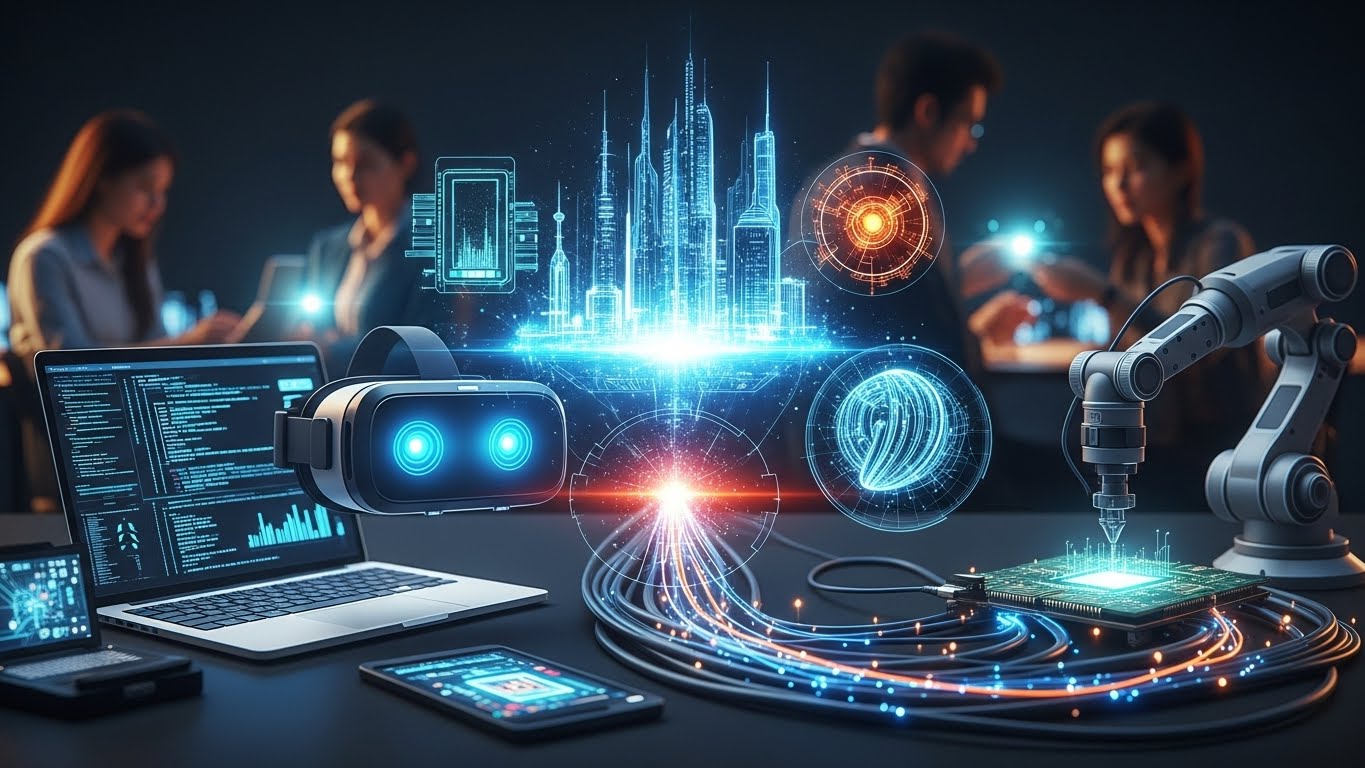
Technology is advancing at an unprecedented pace, transforming the way we live, work, and interact. From artificial intelligence to renewable energy solutions, the technological landscape is evolving in ways that were once considered science fiction. This blog explores the most significant technological innovations, their impact on society, and what the future might hold.
Artificial Intelligence and Machine Learning
Artificial intelligence (AI) has become a cornerstone of modern technology. Machine learning, a subset of AI, allows computers to analyze vast amounts of data and make decisions without explicit programming. AI is now used in industries ranging from healthcare to finance. In healthcare, AI algorithms can predict diseases, analyze medical images, and even recommend personalized treatment plans. In finance, AI helps detect fraudulent transactions and automate investment strategies. The integration of AI into everyday life is making processes faster, smarter, and more efficient.
The Rise of Quantum Computing
Quantum computing represents a revolutionary leap in computing power. Unlike classical computers that use bits to process information as zeros and ones, quantum computers use qubits, which can exist in multiple states simultaneously. This allows them to solve complex problems much faster than traditional computers. Quantum computing has the potential to revolutionize fields such as cryptography, drug discovery, and climate modeling. While the technology is still in its early stages, companies and research institutions worldwide are investing heavily in quantum research to unlock its full potential.
5G and the Future of Connectivity
The rollout of 5G networks is set to redefine connectivity. With speeds up to 100 times faster than 4G, 5G enables seamless streaming, real-time communication, and support for billions of connected devices. This technology is crucial for the growth of the Internet of Things (IoT), smart cities, and autonomous vehicles. 5G not only improves internet speeds but also reduces latency, allowing for near-instantaneous communication between devices. The widespread adoption of 5G will pave the way for innovations that require high-speed, reliable networks.
Internet of Things (IoT) and Smart Devices
The Internet of Things (IoT) connects everyday objects to the internet, enabling them to send and receive data. Smart devices such as home assistants, wearable fitness trackers, and smart appliances are becoming increasingly common. IoT technology is also transforming industries like agriculture, where sensors monitor soil conditions and crop health to optimize yields. In healthcare, wearable devices track vital signs, alerting patients and doctors to potential health issues. The IoT ecosystem is expanding rapidly, making technology more integrated into our daily lives.
Blockchain Beyond Cryptocurrency
Blockchain technology, widely known as the backbone of cryptocurrencies, has applications far beyond digital currencies. Blockchain provides a decentralized, secure, and transparent way to record transactions. Industries such as supply chain management, voting systems, and healthcare are exploring blockchain to improve transparency and reduce fraud. For instance, blockchain can track the origin of goods in the supply chain, ensuring authenticity and reducing counterfeit products. Its ability to provide a tamper-proof record of transactions is driving interest in multiple sectors.
The Evolution of Cybersecurity
As technology advances, cybersecurity becomes increasingly critical. Cyber threats are growing in sophistication, targeting individuals, corporations, and governments alike. Protecting sensitive information requires robust encryption, multi-factor authentication, and continuous monitoring. Emerging technologies like AI are also being used to enhance cybersecurity. AI systems can detect anomalies in network traffic, identify potential threats, and respond to attacks in real time. The future of cybersecurity will depend on the ability to anticipate and counteract evolving threats effectively.
Augmented Reality (AR) and Virtual Reality (VR)
Augmented reality (AR) and virtual reality (VR) are transforming the way we interact with digital content. AR overlays digital information onto the real world, enhancing experiences in fields like retail, education, and healthcare. For example, AR apps allow customers to visualize furniture in their homes before purchasing. VR, on the other hand, immerses users in a fully digital environment, offering applications in gaming, training, and remote collaboration. The continued development of AR and VR technologies is expected to reshape entertainment, education, and professional training.
Sustainable Technology and Green Innovation
Sustainable technology is becoming a priority as the world faces climate change challenges. Innovations in renewable energy, electric vehicles, and energy-efficient devices are helping reduce our carbon footprint. Solar and wind energy technologies are improving in efficiency and affordability, making clean energy more accessible. Electric vehicles are becoming mainstream, supported by advancements in battery technology and charging infrastructure. Technology plays a crucial role in building a sustainable future, balancing innovation with environmental responsibility.
Edge Computing and Data Processing
Edge computing is changing how data is processed and analyzed. Instead of relying solely on centralized cloud servers, edge computing processes data closer to where it is generated. This reduces latency, increases processing speed, and improves reliability. Edge computing is essential for applications like autonomous vehicles, smart factories, and real-time analytics. By distributing computing resources closer to the source of data, organizations can handle large volumes of information more efficiently and make faster, data-driven decisions.
Ethical Considerations in Technology
With technological advancement comes ethical responsibility. Issues like data privacy, AI bias, and the social impact of automation are gaining attention. Organizations must consider the ethical implications of their innovations to ensure technology benefits society without causing harm. Policies and frameworks are being developed to guide responsible AI use, data management, and technological deployment. As technology continues to evolve, balancing innovation with ethical considerations will be critical for creating a positive and inclusive future.
The Role of Robotics in Industry and Daily Life
Robotics is transforming both industrial processes and everyday life. In manufacturing, robots enhance productivity and precision, performing tasks that are dangerous or repetitive for humans. In healthcare, robotic surgery allows for minimally invasive procedures with high accuracy. Service robots assist in logistics, hospitality, and even domestic chores. The integration of AI with robotics is creating intelligent machines capable of learning, adapting, and collaborating with humans. Robotics continues to expand the boundaries of what is possible in automation and human-machine interaction.
The Future of Human-Technology Interaction
The relationship between humans and technology is becoming increasingly intertwined. Emerging interfaces like brain-computer interfaces, gesture recognition, and voice-controlled systems are making interactions more intuitive. Technology is moving beyond screens and keyboards to become an integral part of human experience. The future may see more seamless integration, where digital tools anticipate needs, enhance cognitive capabilities, and provide personalized experiences. This evolution will redefine the way we work, communicate, and engage with the world around us.
Conclusion
The pace of technological advancement shows no signs of slowing down. From AI and quantum computing to sustainable technology and robotics, innovations are reshaping industries and everyday life. While these developments offer tremendous opportunities, they also bring challenges that require careful consideration, particularly in ethics, privacy, and security. Embracing technology responsibly can lead to a future where human potential is amplified, global challenges are addressed, and society thrives in a connected, intelligent world. Technology is not just a tool; it is a driving force shaping the future of humanity.