
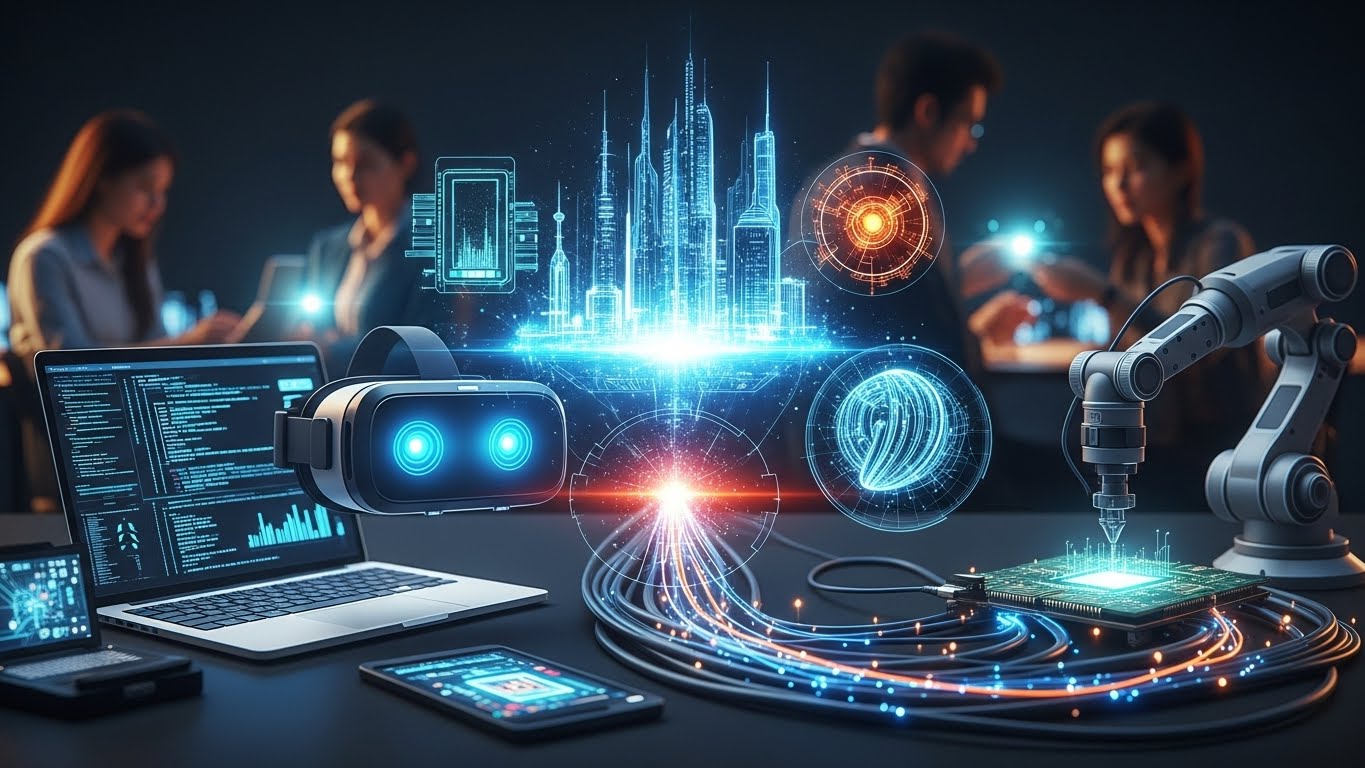
Technology has become an inseparable part of our lives, shaping the way we communicate, work, learn, and even think. From the smartphones in our pockets to the sophisticated artificial intelligence systems driving industries, technology’s evolution is rapid and relentless. In this blog, we will explore the key trends, innovations, and implications of modern technology, and how it continues to redefine our world.
The Rise of Artificial Intelligence
Artificial Intelligence (AI) is no longer a concept confined to science fiction. Today, AI is present in everything from voice assistants to healthcare diagnostics, autonomous vehicles, and predictive analytics. One of the most profound impacts of AI is its ability to analyze vast amounts of data quickly and derive meaningful insights that humans might miss.
Machine learning, a subset of AI, allows systems to improve automatically through experience. For example, recommendation engines on entertainment platforms learn user preferences to suggest content tailored to individual tastes. Similarly, AI in healthcare can predict diseases, recommend treatment plans, and even assist in robotic surgeries, improving precision and patient outcomes.
The growth of AI also raises important ethical and societal questions. How do we ensure AI systems are unbiased? Who is responsible when AI makes mistakes? These challenges highlight the need for careful development and regulation as AI becomes more integrated into our daily lives.
Cloud Computing and Its Expanding Role
Cloud computing has revolutionized the way organizations manage data and applications. By allowing companies to store and access data over the internet instead of relying solely on physical servers, cloud computing offers scalability, flexibility, and cost efficiency.
Businesses can now deploy applications in the cloud within minutes, scale resources up or down based on demand, and enable employees to collaborate remotely without worrying about infrastructure limitations. This shift has been particularly vital during global events that have emphasized remote work and virtual collaboration.
Moreover, cloud computing is a backbone for other technological advancements such as AI and the Internet of Things. Without cloud platforms, deploying and managing complex AI models or connecting millions of smart devices would be nearly impossible. As cloud services continue to evolve, we can expect even faster innovation cycles and more efficient digital solutions.
The Internet of Things: A Connected World
The Internet of Things (IoT) refers to the network of physical devices connected to the internet, sharing data and enabling automation. Smart homes, wearable devices, connected cars, and industrial sensors are all part of the IoT ecosystem.
IoT offers numerous benefits, including convenience, efficiency, and safety. For example, smart thermostats can adjust temperature based on user behavior, while wearable health trackers monitor heart rates and sleep patterns in real-time. In industry, IoT devices enable predictive maintenance, reducing downtime and saving costs.
However, the rapid expansion of IoT also introduces challenges related to privacy and security. With billions of devices transmitting sensitive data, robust cybersecurity measures are essential to protect users and prevent malicious attacks.
Blockchain Beyond Cryptocurrency
While blockchain technology is often associated with cryptocurrencies like Bitcoin, its potential extends far beyond digital money. Blockchain is a decentralized and immutable ledger system that ensures transparency, security, and trust in digital transactions.
Industries such as supply chain management, healthcare, finance, and even voting systems are exploring blockchain to improve transparency and reduce fraud. For example, in supply chains, blockchain can track products from origin to store, ensuring authenticity and reducing counterfeiting.
Despite its promise, blockchain adoption faces hurdles such as scalability, energy consumption, and regulatory concerns. As the technology matures, it is likely to play a transformative role in how we exchange information and conduct secure digital transactions.
5G Technology and Ultra-Fast Connectivity
The rollout of 5G networks marks a new era in telecommunications, promising faster speeds, lower latency, and greater connectivity. Unlike previous generations, 5G has the capacity to support massive IoT deployments, real-time applications, and immersive technologies such as augmented reality (AR) and virtual reality (VR).
For businesses, 5G enables innovations in areas like autonomous transportation, smart cities, and remote healthcare. High-speed connectivity allows for real-time monitoring, instant communication, and seamless streaming of high-resolution content.
For consumers, 5G means faster downloads, smoother video calls, and better gaming experiences. As 5G adoption grows globally, it will accelerate digital transformation across sectors and unlock possibilities that were once considered futuristic.
Augmented Reality and Virtual Reality
Augmented Reality and Virtual Reality technologies are redefining human experiences by blending the digital and physical worlds. AR overlays digital information onto the real world, enhancing perception and interaction, while VR immerses users in a fully virtual environment.
Applications of AR and VR extend beyond entertainment. In education, these technologies create interactive learning experiences, allowing students to explore historical sites or conduct virtual science experiments. In healthcare, VR is used for surgical training and pain management, while AR assists in complex procedures by overlaying vital information.
The entertainment industry, retail, and real estate sectors are also leveraging AR and VR for immersive experiences that engage users in new and innovative ways. As hardware becomes more affordable and software more sophisticated, these technologies are likely to become mainstream tools in everyday life.
Cybersecurity in an Increasingly Digital World
With the rapid expansion of digital technology comes an increased risk of cyber threats. Cybersecurity is no longer just a technical concern; it is a critical component of organizational strategy and personal safety.
Modern cyber attacks are highly sophisticated, targeting businesses, governments, and individuals alike. Protecting sensitive data, ensuring system integrity, and maintaining user trust are paramount. This has led to the rise of advanced security measures, including multi-factor authentication, encryption, behavioral analytics, and AI-powered threat detection.
As our lives become more digitally interconnected, cybersecurity will continue to be a top priority. Organizations must proactively invest in security infrastructure and cultivate a culture of digital awareness to mitigate risks and prevent breaches.
Green Technology and Sustainable Innovation
The intersection of technology and sustainability is gaining attention as the world confronts environmental challenges. Green technology focuses on developing solutions that reduce environmental impact, conserve energy, and promote sustainable practices.
Innovations such as renewable energy systems, smart grids, electric vehicles, and energy-efficient data centers are examples of technology addressing environmental concerns. AI and IoT also play a role in optimizing resource usage, reducing waste, and enhancing sustainability in urban planning and agriculture.
As consumers and governments increasingly prioritize sustainability, businesses are motivated to integrate green technologies into their operations. This trend not only benefits the environment but also presents new economic opportunities and drives long-term innovation.
The Future of Work: Technology and Human Collaboration
Technology is reshaping the workplace, creating new opportunities and challenges for employees and employers alike. Automation, AI, and collaborative software tools are changing the nature of work, allowing for greater efficiency and flexibility.
While some jobs may become automated, new roles are emerging that require creativity, problem-solving, and human judgment. The integration of technology in work processes is also enabling remote work, global collaboration, and access to a diverse talent pool.
Organizations must adapt by investing in reskilling employees, fostering digital literacy, and creating an environment where humans and technology complement each other. The future of work will not be purely digital or purely human—it will be a synergy of both.
Conclusion: Embracing the Digital Revolution
Technology continues to evolve at an unprecedented pace, transforming the way we live, work, and interact. From AI and IoT to 5G and sustainable innovations, the digital revolution offers enormous potential to improve quality of life, enhance efficiency, and drive economic growth.
However, these advancements also come with responsibilities. Ethical considerations, cybersecurity, and sustainability must remain at the forefront of technological development. By embracing innovation thoughtfully and strategically, we can harness the power of technology to build a smarter, safer, and more connected world.
The journey of technology is far from over. As new innovations emerge, our relationship with technology will deepen, opening doors to opportunities that were once unimaginable. By understanding, adapting, and responsibly leveraging these advancements, we can ensure that technology continues to serve humanity in meaningful and transformative ways.