
Introduction
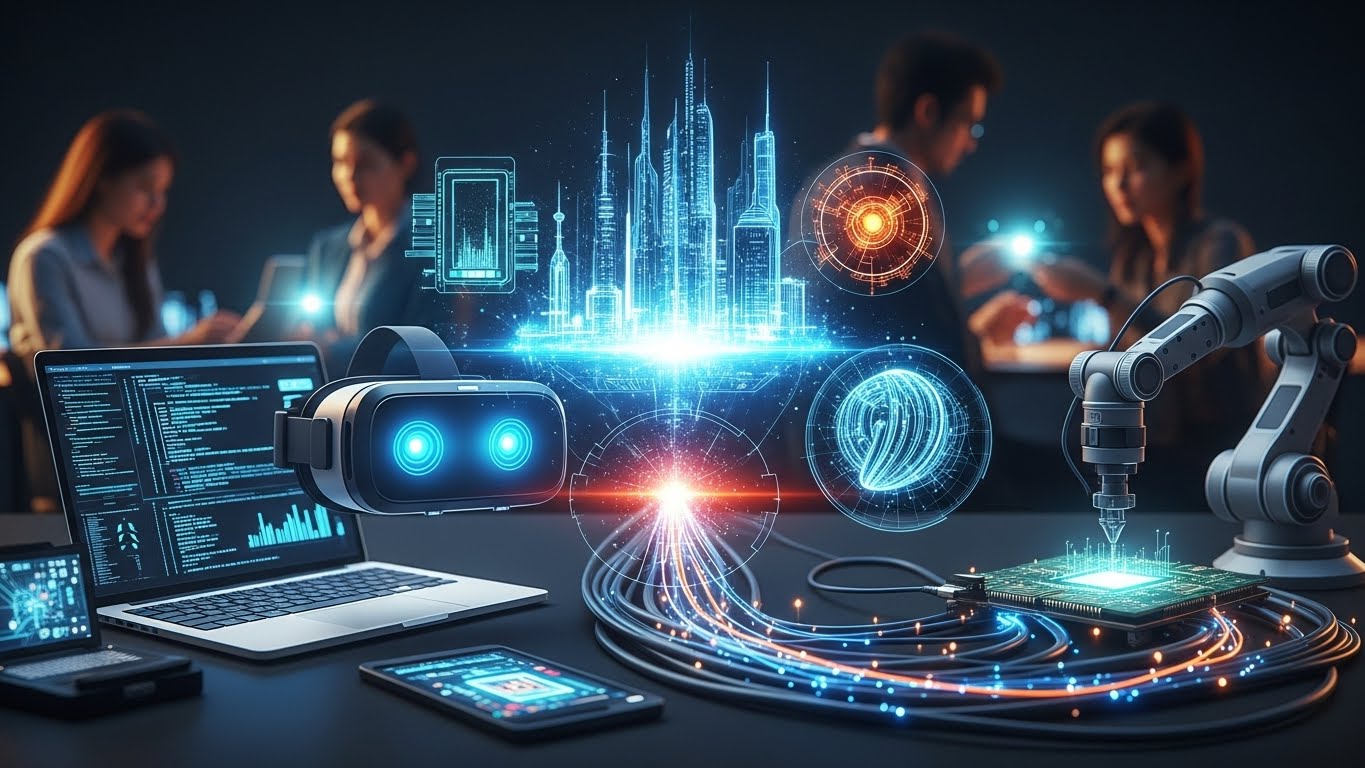
Technology has evolved from being a mere tool for survival to a force that defines our existence. Every new wave of innovation reshapes how humans interact, create, and think. The 21st century stands as the pinnacle of this evolution—a digital dawn where artificial intelligence, quantum computing, biotechnology, and the Internet of Things converge to redefine the boundaries of possibility. The influence of technology extends beyond devices and systems; it shapes cultures, economies, and individual identities. This blog explores how emerging technologies are transforming our world, the opportunities they create, and the challenges they pose to humanity’s future.
The Rise of Artificial Intelligence
Artificial Intelligence (AI) is perhaps the most transformative technology of our era. What began as simple machine learning algorithms has evolved into systems capable of understanding natural language, recognizing faces, driving vehicles, and even composing art. AI is not just a futuristic dream—it is embedded in daily life, from smartphones that predict our next move to healthcare systems that detect diseases before symptoms appear.
The real power of AI lies in its ability to learn and adapt. With advancements in deep learning, neural networks, and generative models, machines now exhibit decision-making processes that once belonged exclusively to humans. However, this power raises concerns about ethics, privacy, and control. As AI continues to automate jobs and reshape industries, the global workforce must adapt by cultivating skills that complement, rather than compete with, machines.
Quantum Computing: The New Frontier
If artificial intelligence represents the brain of future technology, quantum computing is its beating heart. Traditional computers operate using bits—either 0 or 1. Quantum computers, however, use qubits, which can exist as both 0 and 1 simultaneously. This ability allows them to perform complex calculations at speeds unimaginable for classical systems.
Quantum computing could revolutionize multiple sectors. In medicine, it promises breakthroughs in drug discovery by simulating molecular interactions faster than ever before. In finance, it can optimize portfolios and risk models with incredible precision. Even in cybersecurity, quantum computing has a dual impact—it could both break current encryption systems and build stronger ones using quantum encryption.
Yet, the technology remains in its infancy. The challenge lies in maintaining qubit stability and preventing errors during computation. Scientists worldwide are racing to overcome these hurdles, and when they do, quantum computing will likely trigger a technological renaissance.
The Internet of Things: A Connected World
The Internet of Things (IoT) is the invisible web connecting our devices, homes, vehicles, and even cities. Through sensors and data transmission, IoT enables machines to communicate and make autonomous decisions. Imagine a smart home where your refrigerator orders groceries, your thermostat adjusts to your preferences, and your car communicates with traffic systems to find the best route—all without human input.
IoT’s influence extends beyond convenience. In agriculture, smart sensors monitor soil moisture, weather, and crop health, optimizing resource use and boosting productivity. In healthcare, wearable devices track vital signs in real-time, sending alerts to doctors and saving lives. Urban planners use IoT data to create smart cities with efficient transportation and energy systems.
However, this hyperconnectivity also introduces security risks. Each connected device can become a potential entry point for hackers. As IoT expands, data protection and cybersecurity become critical concerns, demanding robust frameworks to safeguard personal and industrial information.
Biotechnology and Human Enhancement
Biotechnology is redefining what it means to be human. With advances in genetic engineering, bioinformatics, and synthetic biology, scientists now have the tools to edit life itself. The discovery of CRISPR-Cas9 technology allows for precise DNA modification, offering potential cures for genetic diseases that were once considered untreatable.
Beyond healthcare, biotechnology is driving innovation in food production, environmental sustainability, and even human enhancement. Lab-grown meat offers a sustainable alternative to traditional livestock farming, while bioengineered crops resist pests and harsh climates. On a more futuristic note, scientists are exploring the integration of technology into the human body—cybernetic implants that restore lost senses or enhance physical abilities.
These developments, however, raise profound ethical questions. Should humans alter their own biology for the sake of progress? Who decides the boundaries of genetic modification? Balancing innovation with morality remains one of the greatest challenges in the biotechnology revolution.
The Power of 5G and Beyond
Connectivity has always been the backbone of technological advancement. The rollout of 5G networks represents a leap in communication speed and reliability. With near-instant data transfer, 5G enables innovations that were previously constrained by latency and bandwidth. Autonomous vehicles, remote surgeries, and augmented reality all rely on this rapid communication infrastructure.
Looking further ahead, discussions have already begun about 6G technology. Expected to emerge by the end of this decade, 6G will combine artificial intelligence and cloud computing to create an intelligent network capable of predicting user needs in real time. Such connectivity will blur the boundaries between physical and digital spaces, bringing the concept of the “metaverse” closer to everyday life.
The Metaverse: A New Digital Reality
The concept of the metaverse—a virtual world where users can interact, work, and play—has shifted from science fiction to near reality. With the integration of virtual reality (VR) and augmented reality (AR), the metaverse aims to create immersive experiences that mirror real life. Companies are investing heavily in developing these platforms, envisioning digital economies where users can own property, create businesses, and socialize in ways never before possible.
While the potential is vast, the metaverse also presents challenges. Issues of identity, privacy, and digital ownership are at the forefront of debate. As virtual and real economies merge, governments and corporations must navigate new legal and ethical landscapes. Still, for many, the metaverse symbolizes the next step in human communication—an evolution of the internet into a fully immersive, three-dimensional experience.
Cybersecurity: The Shield of the Digital Age
As our dependence on technology deepens, so does the need for security. Cyberattacks have evolved from simple viruses to sophisticated operations targeting governments, corporations, and individuals. Data breaches, ransomware, and identity theft are now global threats, capable of disrupting economies and undermining trust in digital systems.
Cybersecurity has become a strategic priority across all sectors. Artificial intelligence is being used not only by attackers but also by defenders to predict and prevent intrusions. Governments are establishing cybersecurity frameworks to protect critical infrastructure, while companies invest heavily in encryption, multi-factor authentication, and threat intelligence.
Yet, cybersecurity is not solely a technological issue—it’s a human one. Awareness, education, and responsible behavior remain essential in defending against cyber threats. A secure digital world depends on collective vigilance as much as it does on advanced software.
Sustainability and Green Technology
Technology and sustainability may once have seemed at odds, but they are increasingly aligned. Green technology seeks to use innovation to protect and preserve the planet. Renewable energy systems, electric vehicles, and carbon capture technologies are transforming the global energy landscape. Artificial intelligence and IoT are being leveraged to monitor environmental conditions, optimize energy consumption, and reduce waste.
Data centers, which power the digital world, are becoming more energy-efficient through the use of advanced cooling systems and renewable energy sources. Smart grids distribute electricity more intelligently, reducing power loss and promoting renewable integration. The rise of sustainable technology reflects a broader shift in societal values—progress is no longer measured only by speed and scale but also by responsibility and impact.
The Ethical Dimension of Technology
With great power comes great responsibility. The pace of technological advancement often outstrips the development of ethical frameworks to govern it. Issues such as data privacy, algorithmic bias, and digital inequality demand urgent attention. As machines make decisions that affect human lives, transparency and accountability become essential.
Technology is not inherently good or bad—it reflects the values of its creators and users. Ensuring that innovation serves humanity rather than divides it requires conscious effort. Governments, corporations, and individuals must collaborate to create ethical guidelines that protect rights while fostering progress.
Conclusion: The Future Belongs to the Curious
The story of technology is ultimately the story of human curiosity. From the invention of the wheel to the rise of quantum computers, every leap forward begins with a question—what if? As we stand on the threshold of unprecedented change, one truth remains constant: technology is only as powerful as the purpose behind it.
The digital dawn offers limitless possibilities, but it also challenges us to act with wisdom. The future will be shaped not by the machines we build but by the choices we make in building them. Embracing innovation while safeguarding humanity’s core values will ensure that the next chapter of technological evolution is not only advanced but also compassionate, inclusive, and sustainable.