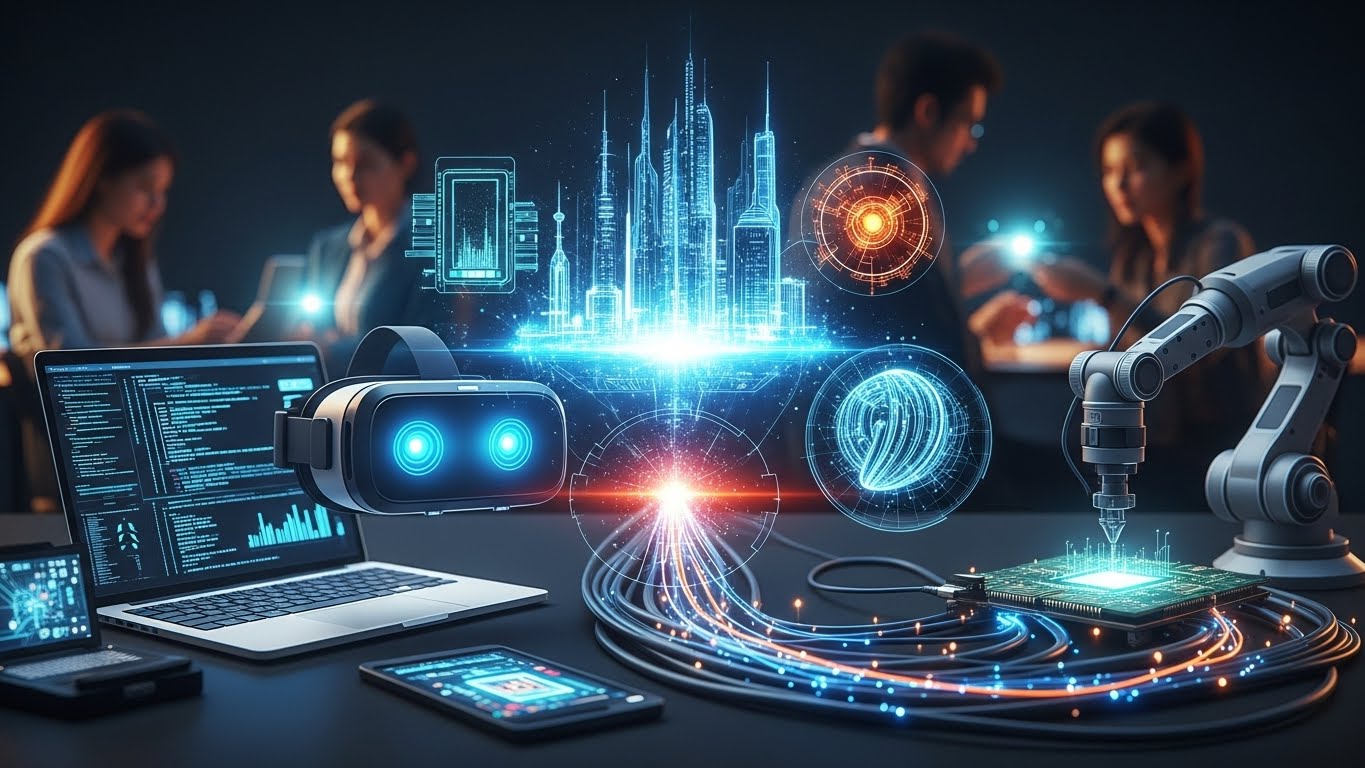
Introduction: The Digital Transformation of Our Existence
Technology has evolved from a mere tool of convenience into an inseparable part of human life. It influences how we work, learn, communicate, and even think. From the first wheel to artificial intelligence, the journey of technology has been one of innovation, exploration, and adaptation. Every generation witnesses new waves of technological revolutions that reshape the world. Today, we stand at a point where technology is not just an instrument of progress but a driving force that defines the very rhythm of modern civilization.
The Evolution of Technology Through Time
The earliest signs of technological progress were born from necessity. Early humans crafted stone tools for survival, marking the beginning of innovation. The invention of the wheel revolutionized transport and trade, while the discovery of fire changed how humans lived and ate. As centuries passed, technological milestones accelerated — from printing presses to steam engines, from electricity to telecommunication. The 20th century ushered in the computer age, leading to automation and the internet revolution. Each invention laid the foundation for the next, illustrating the limitless potential of human creativity.
The Dawn of the Digital Era
The digital revolution began with computers that could perform calculations faster than any human. Over time, these machines became smaller, smarter, and more powerful. The development of the internet in the late 20th century changed everything. It connected the world in ways that were once unimaginable. Communication became instant, and information became accessible to everyone. Today, technology defines how we learn, socialize, and conduct business. The digital age has democratized knowledge and opportunity, allowing individuals to create, share, and influence at an unprecedented scale.
Artificial Intelligence: The Brain Behind the Machine
Artificial intelligence, or AI, has transformed how we interact with machines. It allows computers to learn, reason, and make decisions. AI powers virtual assistants, self-driving cars, facial recognition systems, and countless other applications. In healthcare, it helps doctors diagnose diseases more accurately. In finance, it predicts market trends. In education, it personalizes learning experiences. AI is also reshaping entertainment, from personalized playlists to realistic video games. However, the rise of AI also brings ethical concerns about privacy, job displacement, and decision-making transparency. Striking a balance between innovation and responsibility remains one of the key challenges of our era.
The Internet of Things: Building a Connected World
The Internet of Things, often referred to as IoT, connects everyday objects to the internet, allowing them to communicate and share data. This technology has turned homes into smart ecosystems. From thermostats that adjust temperatures automatically to refrigerators that track food inventory, IoT enhances comfort and efficiency. In cities, sensors monitor traffic and air quality, while industries use connected machines for predictive maintenance and automation. The Internet of Things has made the world more intelligent and responsive, but it also requires strong cybersecurity to protect personal and sensitive data from misuse.
5G Connectivity: The Next Leap in Communication
The rollout of 5G technology is revolutionizing communication with lightning-fast speeds and minimal delays. It is not just about faster internet on mobile phones; it enables entire industries to operate more efficiently. Self-driving cars depend on 5G networks to communicate safely in real time. Smart cities use it to manage resources more effectively, and hospitals can perform remote surgeries with precision. The power of 5G extends to entertainment, allowing for seamless virtual and augmented reality experiences. With its global reach and high capacity, 5G represents a new chapter in how humans and machines interact.
Cloud Computing: The Invisible Infrastructure of Modern Life
Cloud computing has changed how businesses and individuals store and access data. Instead of relying on physical storage, information is now hosted on virtual servers accessible from anywhere. This technology enables flexibility, scalability, and collaboration. Organizations can manage large-scale operations without expensive hardware, while individuals enjoy access to files across devices. The cloud also plays a crucial role in supporting artificial intelligence, data analytics, and online education. However, with convenience comes the need for stronger data protection and regulatory compliance to maintain trust in digital systems.
Technology in Healthcare: Saving Lives Through Innovation
Healthcare has seen remarkable transformation through technology. Advanced diagnostic tools, robotic surgeries, and telemedicine have made healthcare more efficient and accessible. Artificial intelligence helps detect diseases like cancer at early stages, improving survival rates. Wearable devices monitor vital signs, encouraging preventive care and healthier lifestyles. During global crises, such as pandemics, technology enables remote consultations, data analysis, and vaccine research. The combination of technology and medicine continues to push boundaries, turning once-impossible treatments into reality and saving millions of lives worldwide.
Education in the Digital Era
The way we learn has changed dramatically due to technology. Traditional classrooms have transformed into digital spaces where students can learn anytime, anywhere. Online platforms provide access to global resources, while interactive tools make learning more engaging. Artificial intelligence tailors education to individual needs, ensuring that every learner progresses at their own pace. Virtual and augmented reality bring complex subjects like science and history to life, making them easier to understand. While digital learning bridges educational gaps, it also highlights the importance of addressing the digital divide so that all students have equal access to opportunities.
The Role of Technology in Modern Business
Businesses thrive on technology in today’s world. From startups to global corporations, digital tools have become essential for productivity, marketing, and innovation. Automation reduces errors and increases efficiency, while data analytics helps companies understand consumer behavior. Artificial intelligence assists in decision-making, and e-commerce platforms expand market reach. Remote work has become a global trend, supported by video conferencing, cloud storage, and collaborative applications. Technology has also given rise to new industries, such as digital marketing, cybersecurity, and app development, creating endless possibilities for economic growth.
Cybersecurity: Protecting the Digital Frontier
As technology advances, cyber threats have become more sophisticated. Cybersecurity has emerged as one of the most critical aspects of the digital world. Hackers target individuals, businesses, and even governments, stealing sensitive data and disrupting systems. Protecting information through encryption, multi-factor authentication, and strong firewalls has become essential. Artificial intelligence is now used to detect suspicious activities and prevent cyberattacks. Education about online safety is equally important, ensuring that users understand how to protect themselves in a digital environment. The future of technology depends on how effectively we can secure it.
Environmental Technology: Toward a Sustainable Future
While technology has fueled progress, it has also impacted the environment. Today, innovation is being used to repair that damage. Renewable energy sources such as solar and wind power are replacing fossil fuels. Electric vehicles are reducing carbon emissions, while smart grids optimize energy consumption. Scientists are developing biodegradable materials and sustainable manufacturing processes. Technology also helps monitor environmental changes, allowing for better climate management. Green technology is not just a trend but a necessity for ensuring a sustainable future for the planet.
The Ethics of Innovation
With rapid technological growth come serious ethical challenges. Issues like digital privacy, data ownership, and artificial intelligence bias are now central to public discussion. How much control should machines have? Who owns the data we generate daily? These are questions societies must address to maintain fairness and accountability. Ethical technology requires transparency, inclusivity, and respect for human rights. Innovators must consider the long-term consequences of their creations, ensuring that progress benefits everyone rather than deepening inequality or dependency.
The Future of Technology: Beyond Imagination
The future of technology is filled with limitless potential. Artificial intelligence will continue to evolve, possibly leading to self-aware systems. Quantum computing will solve problems currently beyond human capability, revolutionizing science and industry. Biotechnology will enhance human health and longevity, while space technology could make interplanetary travel a reality. The fusion of human creativity with technological intelligence will create possibilities we can only dream of today. However, with great power comes great responsibility. The future must be guided by ethics, empathy, and sustainability to ensure that technology remains a force for good.
Conclusion: Embracing the Tech-Driven Tomorrow
Technology is the most powerful tool humanity has ever created. It connects, empowers, and transforms lives. From the simplest gadgets to the most advanced machines, technology is a reflection of our desire to progress and innovate. Yet, it is not without challenges. The key to a successful technological future lies in balance — using innovation responsibly, protecting privacy, and ensuring equal access for all. The digital age has given us endless opportunities, but it is our collective wisdom that will determine how we shape them. As we look beyond the screen, one truth remains clear: technology is not just changing the world; it is redefining what it means to be human.