Introduction
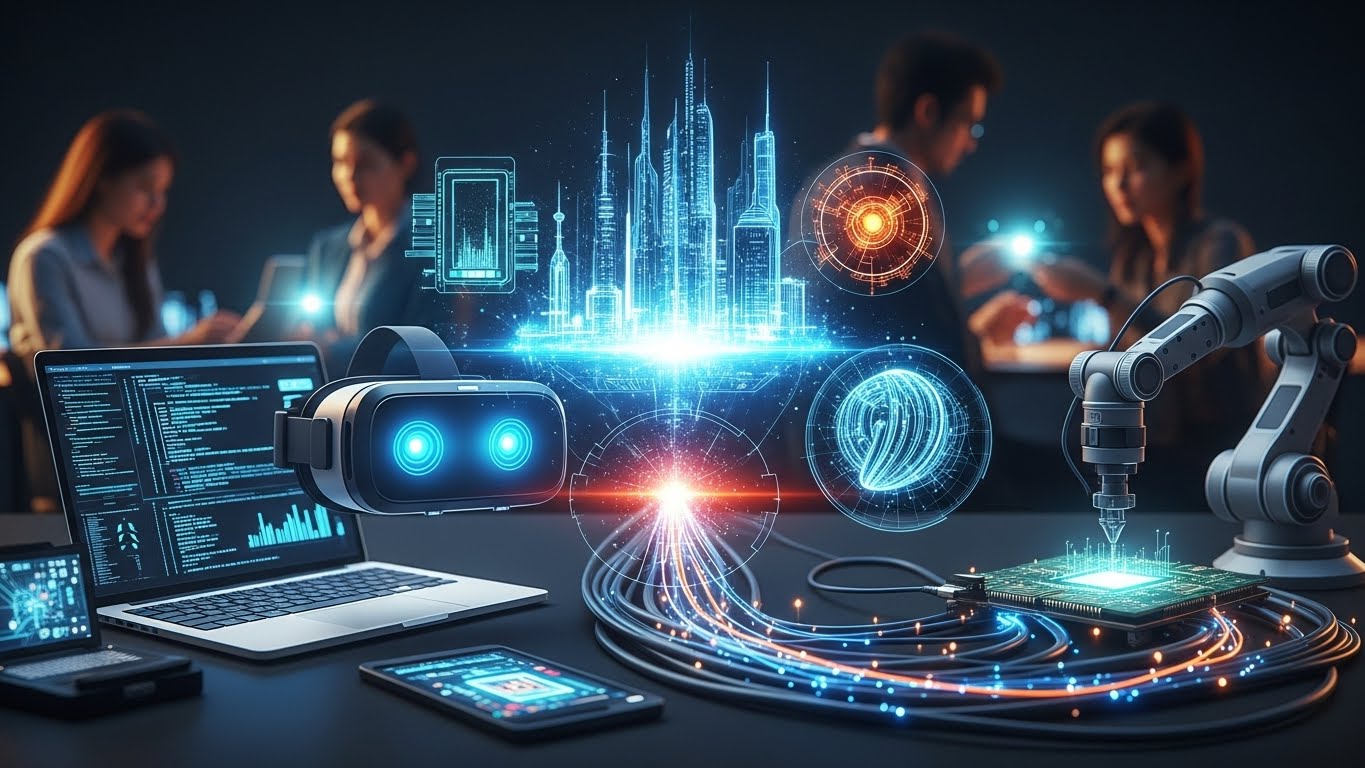
Technology has become the defining feature of the modern world. It has transformed the way humans live, work, communicate, and entertain themselves. From the earliest inventions of the wheel and fire to contemporary developments in artificial intelligence, quantum computing, and the Internet of Things, technology continues to reshape societies, economies, and daily life.
In today’s interconnected world, technological advancements are not just tools; they are catalysts that redefine possibilities. They influence education, healthcare, transportation, entertainment, and communication, offering solutions to complex problems while opening doors to unprecedented opportunities. This blog explores the evolution, current trends, and future possibilities of technology, highlighting its profound impact on human progress.
The Historical Evolution of Technology
Human civilization has progressed alongside technological innovations. In the earliest days, simple tools such as stone implements, fire, and the wheel enabled survival, transportation, and early societal development. The agricultural revolution introduced farming techniques, irrigation systems, and domestication of animals, allowing human populations to settle and thrive.
The Industrial Revolution marked a significant leap, introducing steam engines, mechanized production, and mass transportation. Factories, railroads, and mechanized agriculture increased productivity and efficiency, transforming economies and social structures. These innovations created a foundation for modern technological growth.
The 20th century brought the rise of electricity, telecommunication, computing, and digital technology. The invention of computers and the internet revolutionized information processing, communication, and global connectivity. This era set the stage for the rapid technological acceleration witnessed in the 21st century.
Computing and the Internet: The Backbone of Modern Technology
Computers have become central to technological progress. Early mainframes gave way to personal computers, allowing individuals and organizations to process data, solve complex problems, and communicate digitally. Computing has transformed industries such as finance, healthcare, education, and manufacturing.
The internet further amplified computing’s impact by connecting the world. Information can now travel instantaneously across continents, facilitating global communication, e-commerce, research, and education. The internet has democratized access to knowledge, allowing people worldwide to learn, collaborate, and innovate from virtually anywhere.
Cloud computing represents the next leap, enabling scalable data storage, processing, and software deployment over the internet. Businesses and individuals no longer rely solely on physical hardware, allowing flexibility, cost-efficiency, and collaboration on a global scale.
Artificial Intelligence and Machine Learning
Artificial intelligence (AI) is transforming the way humans interact with technology. AI allows machines to learn from data, make decisions, and perform tasks that previously required human intelligence. From virtual assistants and predictive analytics to autonomous vehicles and medical diagnostics, AI is shaping a wide array of industries.
Machine learning, a branch of AI, enables systems to improve performance over time by analyzing patterns and feedback. This technology powers recommendation engines, fraud detection, natural language processing, and personalized content experiences. AI is also automating routine tasks, increasing efficiency and productivity across sectors.
AI’s integration into daily life extends beyond automation. Intelligent systems are revolutionizing healthcare by predicting disease outbreaks, assisting in diagnosis, and personalizing treatment. In education, AI provides adaptive learning platforms that cater to individual student needs.
Mobile Technology and Connectivity
Smartphones and mobile devices have transformed human interaction with technology. Mobile technology enables instant access to information, communication, banking, shopping, and entertainment. It has created a culture of immediacy, where people perform tasks on the go and remain constantly connected.
Advancements in mobile networks, including 4G and emerging 5G technology, have increased data speeds, reduced latency, and supported innovations such as real-time streaming, augmented reality, and mobile gaming. Mobile technology also supports telemedicine, remote education, and virtual collaboration, making these services accessible to millions.
Mobile applications have created ecosystems of services that enhance convenience and productivity. From ride-hailing and food delivery to financial management and health tracking, mobile devices serve as hubs for daily life, reshaping how people interact with the world around them.
Smart Devices and the Internet of Things
The Internet of Things (IoT) connects everyday objects to the internet, enabling them to collect and share data. Smart devices such as home assistants, thermostats, security systems, and wearables offer automation, convenience, and personalized experiences.
IoT technology allows remote monitoring, predictive maintenance, and efficient resource management. In healthcare, wearable devices monitor vital signs and alert medical professionals to potential issues. Smart home appliances adjust settings based on user behavior, optimizing energy consumption and enhancing comfort.
Industries also benefit from IoT through improved logistics, supply chain monitoring, and production efficiency. Connected sensors and devices enable real-time data collection and analysis, helping businesses make informed decisions and improve operational performance.
Virtual Reality, Augmented Reality, and Mixed Reality
Virtual reality (VR) immerses users in fully digital environments, providing interactive experiences for gaming, training, and education. Augmented reality (AR) overlays digital content onto the physical world, enhancing navigation, industrial operations, and consumer experiences.
Mixed reality (MR) combines VR and AR, allowing users to interact with both digital and physical objects simultaneously. These technologies are revolutionizing fields such as entertainment, healthcare, architecture, and education by creating immersive and interactive experiences.
For example, VR simulations allow surgeons to practice complex procedures, AR assists engineers in visualizing prototypes, and MR enables collaborative virtual workspaces. These innovations demonstrate technology’s ability to redefine how humans perceive and interact with the world.
Cybersecurity in the Digital Age
As technology advances, cybersecurity has become a critical concern. Cyber threats, including hacking, phishing, ransomware, and data breaches, pose risks to individuals, businesses, and governments. Protecting digital infrastructure requires advanced encryption, multi-factor authentication, and AI-driven threat detection.
Organizations must adopt proactive measures, including continuous monitoring, system audits, and employee training to prevent cyberattacks. The increasing integration of IoT devices and cloud platforms adds complexity to cybersecurity, emphasizing the need for robust and adaptive security strategies.
Safeguarding digital systems is essential to maintain trust, protect sensitive information, and ensure the continued growth of technological innovation.
Technology in Education
Technology has transformed education by making learning accessible, interactive, and personalized. Online courses, digital platforms, and e-learning tools allow students to access content from anywhere, participate in virtual classrooms, and collaborate with peers globally.
AI-powered systems provide adaptive learning experiences, adjusting content to individual student performance and offering personalized recommendations. Gamification and interactive simulations increase engagement, making complex subjects more understandable and memorable.
Educational technology also prepares students for a digital workforce, equipping them with skills in computing, coding, data analysis, and digital communication. Technology has fundamentally changed both how and what we learn, expanding opportunities for learners worldwide.
Healthcare and Medical Technology
Technology has revolutionized healthcare, improving diagnostics, treatment, and patient outcomes. Medical imaging, robotic surgery, telemedicine, and wearable devices enhance precision, efficiency, and accessibility.
AI assists in medical research, analyzing large datasets to identify patterns, predict outbreaks, and support early diagnosis. Wearables track vital signs, monitor chronic conditions, and provide real-time feedback, enabling proactive healthcare interventions.
Telemedicine allows patients to consult with healthcare providers remotely, reducing travel, wait times, and healthcare disparities. Medical technology continues to evolve, making healthcare more personalized, efficient, and accessible to people around the globe.
Sustainable Technology and Environmental Innovation
Sustainable technology seeks to reduce environmental impact while promoting growth and efficiency. Renewable energy sources, electric vehicles, energy-efficient infrastructure, and smart grids contribute to a cleaner, more sustainable future.
IoT and data analytics enable environmental monitoring, resource optimization, and predictive modeling, supporting initiatives to combat climate change. Smart agriculture uses sensors and data to increase crop yield while minimizing water and energy consumption.
The integration of sustainability into technological development highlights the potential for innovation to solve global challenges while advancing human progress responsibly.
Automation and Industrial Technology
Automation and advanced industrial technology are transforming manufacturing, logistics, and service industries. Robotics, AI-powered analytics, and autonomous systems improve efficiency, reduce operational costs, and enhance precision.
Predictive maintenance powered by IoT sensors allows machinery to be serviced proactively, reducing downtime. Automation also frees human workers to focus on creative, strategic, and supervisory tasks, reshaping workforce dynamics.
While automation increases productivity, it also poses challenges related to employment and workforce adaptation. Reskilling programs, education, and technology literacy are crucial for ensuring inclusive and sustainable growth in an automated world.
Emerging Technologies: Quantum Computing and Beyond
Quantum computing represents the next frontier of technological advancement. Unlike classical computers, quantum computers leverage quantum bits (qubits) to perform complex calculations exponentially faster than traditional systems. This technology has the potential to revolutionize cryptography, materials science, pharmaceuticals, and artificial intelligence.
Other emerging technologies, including brain-computer interfaces, 6G networks, and advanced nanotechnology, promise to redefine human-computer interaction, communication, and manufacturing processes. These innovations will shape the future of work, healthcare, entertainment, and scientific discovery.
The Future Impact of Technology
The future of technology is poised to bring unprecedented changes. AI, IoT, VR, AR, quantum computing, and sustainable innovations will continue to redefine human life, work, and interaction. These advancements will create opportunities for global collaboration, knowledge sharing, and problem-solving.
Ethical considerations, cybersecurity, and equitable access will remain critical to ensuring that technology benefits all of society. As innovation accelerates, humans will need to adapt, learn, and engage with technology responsibly to maximize its potential and minimize risks.
Technology will continue to drive progress, offering solutions to global challenges, creating new economic opportunities, and reshaping cultural and social dynamics.
Conclusion
Technology is the cornerstone of modern civilization, transforming every aspect of human life. From computing, AI, and mobile connectivity to VR, IoT, and sustainable innovations, technology enables unprecedented possibilities and drives societal advancement.
Its impact on education, healthcare, industry, and entertainment highlights its transformative power, while challenges in cybersecurity, ethics, and workforce adaptation demand thoughtful solutions.
As we look to the future, technology will continue to reshape the world in ways both visible and unforeseen. Embracing innovation responsibly, investing in education and infrastructure, and fostering global collaboration will ensure that technology remains a force for progress, creativity, and human empowerment.