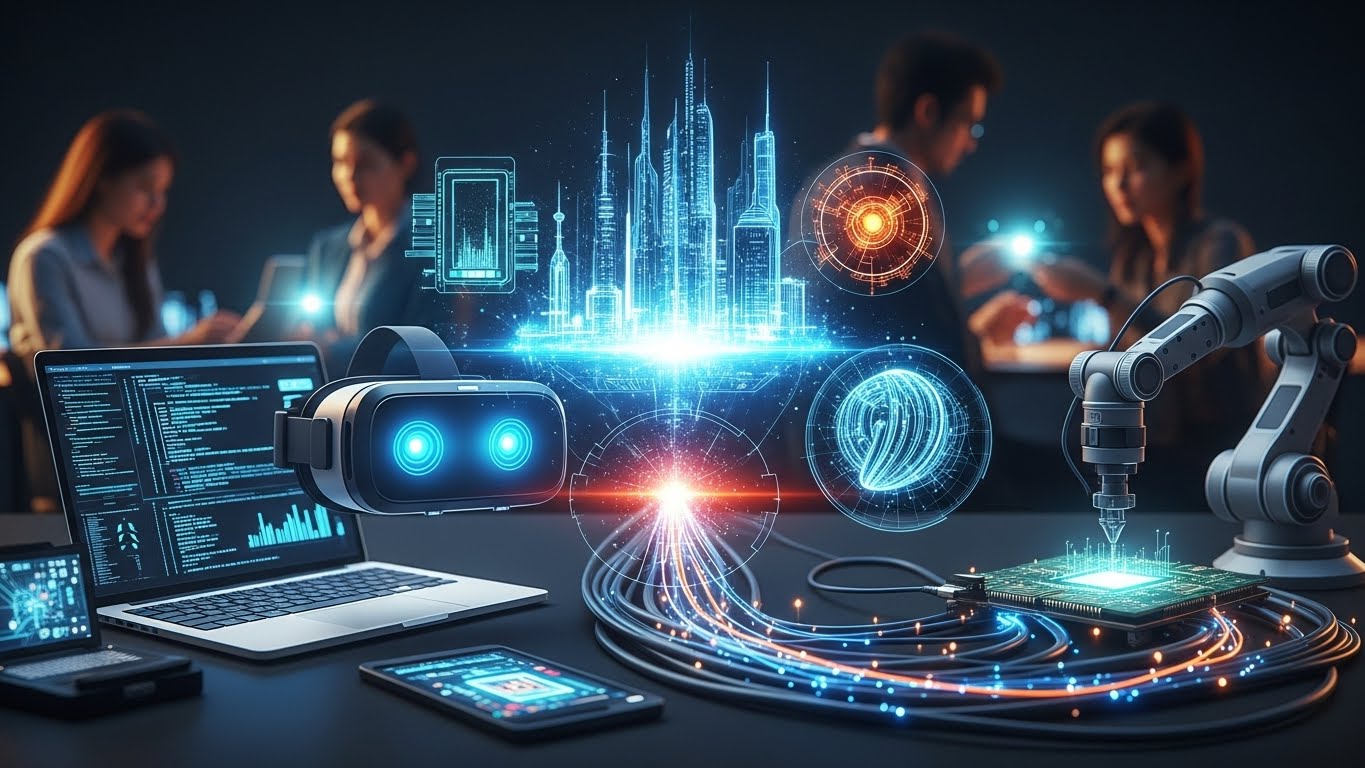

The world of technology is ever-evolving, with new developments emerging almost daily that change the way we live, work, and communicate. As we venture into the future, technology is not just an accessory to our daily lives; it has become an essential part of our existence. From artificial intelligence (AI) and machine learning to quantum computing and renewable energy solutions, tech is shaping our future in unprecedented ways. But how exactly are these innovations impacting our world today? And what can we expect in the years to come? In this post, we’ll dive into the most exciting areas of technological innovation and explore how they are transforming our future.
The Age of Artificial Intelligence and Automation
Artificial intelligence (AI) is no longer a futuristic concept; it is here, and it is rapidly changing industries across the globe. From self-driving cars to personalized shopping experiences, AI is making everyday tasks more efficient and accessible.
AI in Healthcare: Revolutionizing Diagnostics and Treatment
One of the most promising applications of AI is in the field of healthcare. AI-powered tools are revolutionizing medical diagnostics, allowing doctors to detect diseases earlier and more accurately. Machine learning algorithms, trained on vast amounts of data, can analyze medical images and predict conditions such as cancer, heart disease, and neurological disorders with incredible precision.
In addition to improving diagnostics, AI is helping in drug discovery. Traditional methods of finding new treatments are slow and costly, but AI can speed up the process by predicting how different compounds will behave in the human body. Companies like DeepMind are already using AI to discover new proteins, which could pave the way for groundbreaking treatments and cures.
Automation in the Workplace: Changing the Future of Jobs
Automation, powered by AI and robotics, is already reshaping the workplace. Many industries, from manufacturing to logistics, have adopted robots to handle repetitive and dangerous tasks. Automated systems are more efficient and can operate around the clock, improving productivity and reducing human error.
While automation has the potential to increase efficiency, it also raises concerns about job displacement. Jobs that require manual labor or routine tasks are most at risk. However, experts argue that automation will create new types of jobs, particularly in fields like AI development, data analysis, and robotics maintenance. The challenge will be ensuring that workers are equipped with the skills needed to thrive in this new environment.
The Rise of Quantum Computing
Quantum computing is a field that has been in the making for decades, and we are now seeing significant strides in its development. Unlike classical computers, which use bits to process data in binary form (0s and 1s), quantum computers use quantum bits or qubits, which can exist in multiple states simultaneously. This fundamental difference allows quantum computers to solve problems that are currently beyond the reach of even the most powerful supercomputers.
Unlocking the Potential of Quantum Computing
Quantum computers could revolutionize industries like cryptography, finance, and pharmaceuticals. For example, quantum computers could break current encryption methods, making cybersecurity a top concern for the future. On the flip side, they could also enable the development of unbreakable encryption, creating new opportunities for secure communication.
In the field of finance, quantum computers could optimize complex financial models, helping institutions predict market movements with much greater accuracy. This could lead to more stable financial systems and better risk management strategies.
Perhaps one of the most exciting applications of quantum computing is in the pharmaceutical industry. Quantum computers can simulate molecular structures in ways that classical computers cannot, potentially leading to faster and more efficient drug discovery. This could significantly reduce the time and cost required to develop new medications, improving healthcare outcomes globally.
The Power of 5G and the Internet of Things
We’ve all heard the buzz around 5G networks, but what exactly does this next-generation technology bring to the table? 5G promises faster internet speeds, lower latency, and greater connectivity, paving the way for a new wave of innovation.
5G: The Backbone of Smart Cities
One of the most exciting applications of 5G is in the creation of smart cities. 5G networks can support the vast number of connected devices needed to make a city truly “smart.” This includes everything from traffic lights that adjust in real-time to optimize traffic flow to waste management systems that automatically schedule pickups based on real-time data.
In a smart city, everything is interconnected. Sensors placed throughout the city collect data on everything from air quality to energy usage, which is then analyzed to improve urban planning, reduce emissions, and optimize resource distribution. With 5G, this data can be processed and acted upon almost instantaneously, creating more efficient, sustainable, and livable urban environments.
The Internet of Things (IoT): Connecting the World
The Internet of Things (IoT) is the network of devices—everything from smart home products to industrial machinery—that are connected to the internet. With 5G, IoT devices can communicate with each other faster and more reliably, making the concept of a fully connected world a reality.
Smart homes are a prime example of IoT in action. With 5G, your refrigerator could order groceries when you’re running low, your thermostat could adjust to optimize energy usage, and your security system could send real-time alerts to your phone if it detects unusual activity. The possibilities are endless, and 5G will be the driving force behind the widespread adoption of IoT devices.
The Future of Renewable Energy and Sustainability Tech
As concerns about climate change continue to grow, technology is playing an increasingly important role in the transition to a more sustainable future. From solar power innovations to electric vehicles (EVs), the tech industry is at the forefront of developing solutions to reduce our carbon footprint.
Solar Power: Advancing Efficiency and Storage
Solar energy has been around for decades, but recent advancements in solar technology are making it more efficient and accessible than ever before. New materials, like perovskite solar cells, are being developed that are cheaper to produce and more efficient than traditional silicon-based cells.
Additionally, energy storage technologies, such as lithium-ion batteries, are improving, making it easier to store solar energy for use when the sun isn’t shining. This combination of efficient solar panels and advanced energy storage is making renewable energy a more viable option for both homes and businesses.
Electric Vehicles: Driving the Shift Away from Fossil Fuels
Electric vehicles (EVs) are another major area of innovation. With advancements in battery technology, EVs are becoming more affordable and capable of traveling longer distances on a single charge. Additionally, the expansion of charging infrastructure is making it easier for consumers to adopt EVs.
In the long term, the widespread adoption of EVs has the potential to drastically reduce carbon emissions from the transportation sector, one of the largest contributors to global warming. Many countries and companies are already setting ambitious goals for transitioning to electric fleets, and governments are offering incentives to encourage the shift.
The Impact of Tech on Education and Learning
Technology is also transforming the way we learn. From online courses and virtual classrooms to AI-powered personalized learning experiences, technology is making education more accessible and tailored to individual needs.
E-Learning: Breaking Down Barriers
The rise of e-learning platforms has made education more accessible than ever before. Online courses from institutions like Harvard, MIT, and Stanford are available to anyone with an internet connection, and many of them are free. This has democratized education, allowing people from all over the world to access high-quality content.
Additionally, virtual classrooms and remote learning tools are reshaping the traditional classroom experience. Students can now attend classes from the comfort of their homes, participate in interactive discussions, and collaborate with peers across the globe.
Personalized Learning: AI and Education
AI is also playing a significant role in personalizing education. Adaptive learning platforms use AI algorithms to analyze students’ performance and provide customized content based on their strengths and weaknesses. This ensures that each student receives the attention they need, regardless of their learning pace.
Conclusion: The Tech-Fueled Future Awaits
The future is undoubtedly tech-driven. From AI and quantum computing to renewable energy and education, technology is revolutionizing every aspect of our lives. While these advancements bring immense potential, they also come with challenges that must be addressed, from ethical concerns to environmental impact.
As we look ahead, it’s clear that technology will continue to shape the world in ways we can only begin to imagine. What’s certain is that innovation will remain at the heart of progress, pushing humanity toward a more connected, sustainable, and efficient future. The tech-fueled future is not just coming; it’s already here. The question is: are we ready for it?