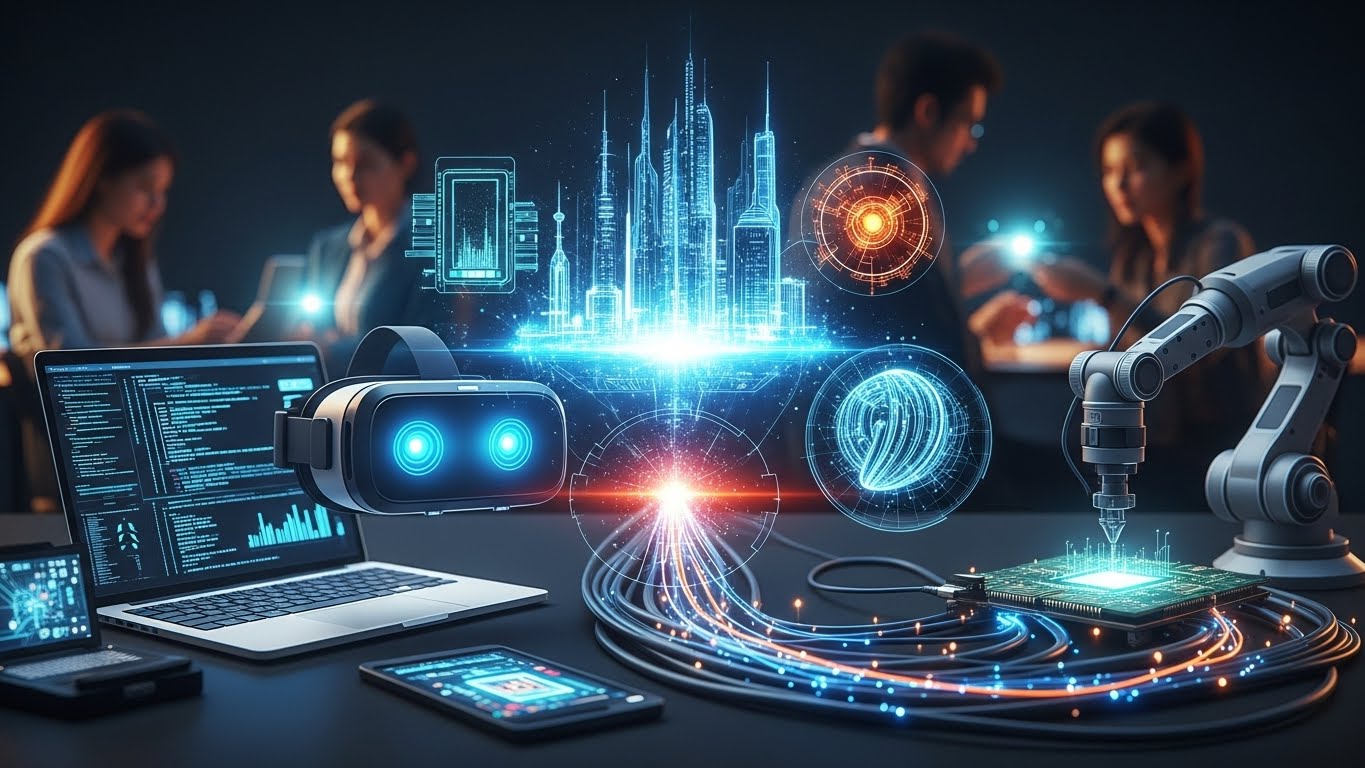

Technology is transforming every aspect of our lives, from the way we communicate to how we work, learn, and even play. As we enter a new era of digital innovation, tech is not just about gadgets and software—it’s about reshaping the very fabric of society. In this blog, we’ll explore the groundbreaking technologies that are reshaping our world, from artificial intelligence to quantum computing, and how these innovations will influence the future.
The Power of Artificial Intelligence
Artificial Intelligence (AI) is no longer just an experimental technology—it’s rapidly becoming part of everyday life. From voice assistants like Siri and Alexa to self-driving cars, AI is at the forefront of technological evolution.
One of the most exciting aspects of AI is its ability to process vast amounts of data and learn from it, improving over time. In healthcare, for example, AI algorithms can analyze medical images and detect early signs of diseases like cancer, providing doctors with powerful tools for diagnosis. In finance, AI helps companies manage investments by predicting market trends and automating decision-making processes.
As we move forward, AI will only become more advanced, with capabilities extending beyond simple task automation to creative fields such as art, music, and design. By 2025, we can expect AI to collaborate with humans in ways that we never thought possible, revolutionizing industries and pushing the boundaries of what machines can do.
The Quantum Leap: Quantum Computing
Quantum computing is another breakthrough technology that promises to change the landscape of innovation. While traditional computers rely on bits that represent data as either 0 or 1, quantum computers use qubits, which can exist in multiple states at once. This unique property allows quantum computers to solve problems that are far too complex for classical machines.
By harnessing the principles of quantum mechanics, quantum computing has the potential to revolutionize fields like cryptography, material science, and pharmaceuticals. For example, quantum computers could dramatically speed up the process of drug discovery by simulating the interactions of molecules, something classical computers struggle to do effectively.
Although quantum computing is still in its early stages, significant progress is being made. Companies and research labs around the world are racing to build the first commercially viable quantum computer, and we can expect major breakthroughs in the next few years. As quantum computing advances, it will enable us to solve problems previously considered intractable, potentially transforming entire industries.
The Metaverse: A New Digital Frontier
The Metaverse is a concept that has captured the imagination of technologists, futurists, and digital natives alike. At its core, the Metaverse is an immersive, persistent virtual world where people can interact with each other, work, play, shop, and socialize, all through the power of augmented and virtual reality (AR/VR).
While the Metaverse is still in its infancy, the technology driving it is rapidly advancing. With the rise of VR and AR headsets, 5G connectivity, and cloud computing, we’re closer than ever to creating fully immersive digital environments that feel as real as the physical world. The Metaverse will not just be a place for gaming and entertainment—it will redefine how we work, socialize, and interact with content.
By 2025, many experts predict that the Metaverse will become an integral part of the digital experience. Virtual offices could replace physical workplaces, allowing remote teams to collaborate as though they were in the same room. Social events, concerts, and festivals will be experienced by millions of people in virtual spaces, breaking down geographical barriers. In fact, the Metaverse could be the future of social media, with individuals creating and inhabiting digital avatars to interact in a shared virtual universe.
Biotechnology: Merging Science with Technology
Biotechnology is one of the most promising fields of technology today, and its potential to improve health and quality of life is enormous. Advances in genetic engineering, personalized medicine, and health-tech wearables are already transforming healthcare.
Gene-editing technologies, particularly CRISPR, have the potential to treat or even cure genetic disorders by modifying DNA. This means diseases that were once considered incurable, such as certain types of cancer and inherited conditions like sickle cell anemia, could be treated at their genetic source. In fact, by 2025, gene therapy could become a mainstream treatment for several diseases, offering hope to millions around the world.
In addition to gene-editing, biotechnology is helping create more personalized healthcare solutions. Using genomic data, doctors will be able to tailor treatments to the individual, rather than relying on one-size-fits-all approaches. Personalized medicine is expected to revolutionize not only how we treat diseases but also how we prevent them. Wearable devices are already monitoring health in real-time, and in the future, they could predict health issues before they arise, allowing for early intervention and improved outcomes.
The Green Tech Revolution: Innovating for Sustainability
As climate change continues to be one of the most critical issues of our time, the tech industry is stepping up to create sustainable solutions. Green technology, from renewable energy to electric vehicles, is poised to play a central role in addressing environmental challenges.
One of the most significant developments in green tech is the rise of renewable energy sources like solar, wind, and hydroelectric power. Advances in energy storage technology are making it possible to store solar and wind energy for use when the sun isn’t shining or the wind isn’t blowing, making renewable energy more reliable and accessible.
Electric vehicles (EVs) are another key innovation that is transforming the transportation sector. With governments around the world implementing stricter emissions regulations, automakers are increasingly shifting to electric-powered vehicles. In fact, by 2025, many experts predict that EVs will account for a substantial portion of new car sales, helping to reduce carbon emissions and the global reliance on fossil fuels.
Green tech is also driving innovation in agriculture. Precision farming, which uses sensors, drones, and data analytics to optimize farming practices, is helping farmers use water, fertilizers, and pesticides more efficiently. This not only leads to higher crop yields but also reduces environmental impact, making agriculture more sustainable.
5G and Connectivity: The Backbone of Future Tech
The advent of 5G technology is set to revolutionize the way we connect to the internet. With faster speeds, lower latency, and greater capacity, 5G will unlock new possibilities for everything from autonomous vehicles to smart cities.
In smart cities, 5G will connect everything from traffic lights to waste management systems, enabling real-time optimization of city services. This will reduce traffic congestion, improve air quality, and make cities more livable and efficient. Similarly, 5G will allow for the seamless integration of the Internet of Things (IoT), enabling devices to communicate with each other and improve everything from home automation to healthcare monitoring.
For industries like entertainment and gaming, 5G will enable new experiences in augmented and virtual reality. Imagine attending live concerts in virtual reality, playing immersive games, or even participating in virtual sports events—all made possible by the high-speed, low-latency capabilities of 5G.
As we move beyond 5G, the potential for even faster and more reliable networks like 6G is on the horizon. These networks will enable further innovations in areas such as holographic communication and real-time global collaboration.
Conclusion: Embracing the Future
The future of technology is bright, with innovations across AI, quantum computing, biotechnology, and sustainability that promise to improve the way we live, work, and connect. These technologies are not only pushing the boundaries of what is possible but also solving some of the world’s most pressing challenges, from climate change to healthcare.
While there are challenges—such as ethical considerations, data privacy, and the impact on jobs—these technologies also present enormous opportunities for growth and progress. As we continue to embrace these innovations, the world will become smarter, more interconnected, and more sustainable.
The future is unfolding before us, and technology is leading the way. It’s an exciting time to be alive, and the innovations of tomorrow will shape a better world for all.