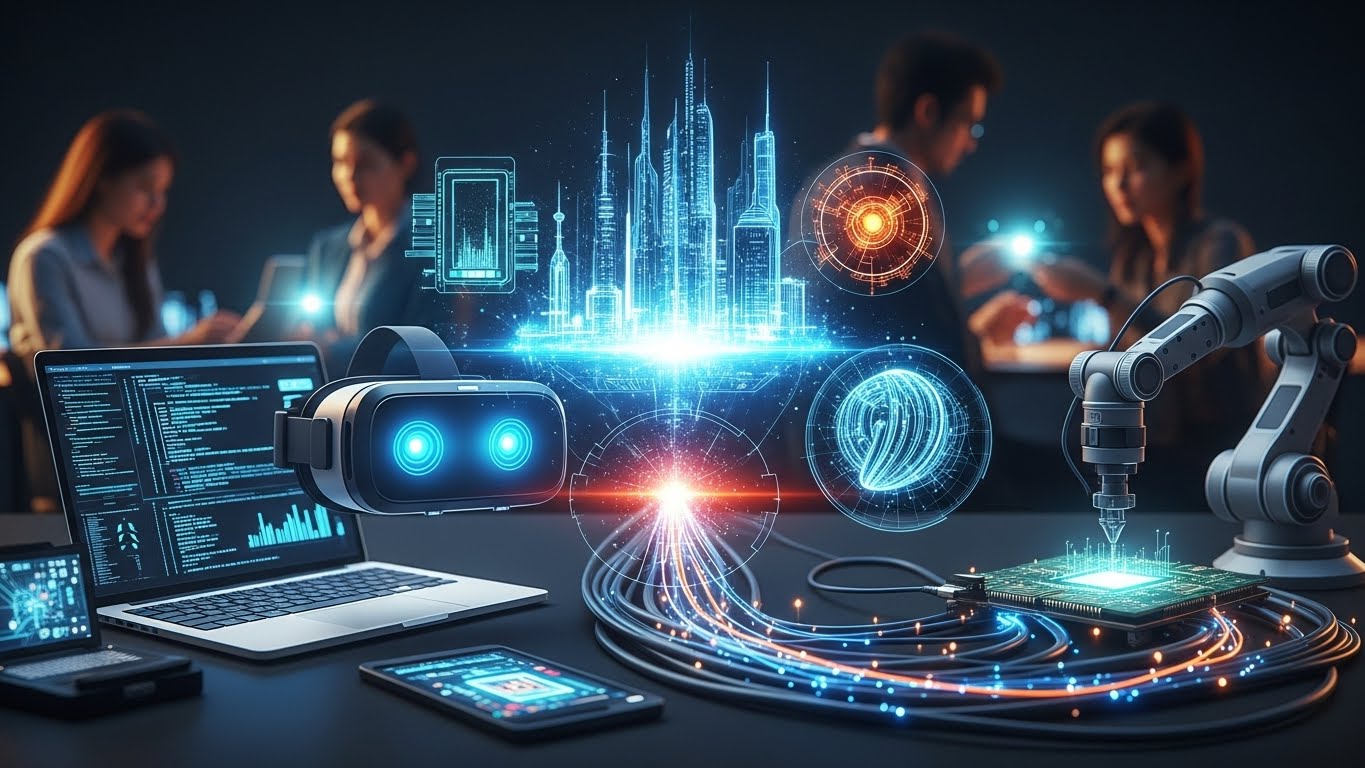
Technology has always been a driving force behind societal changes. From the Industrial Revolution to the rise of the internet, each leap forward has redefined how we live, work, and interact with one another. As we move further into the 21st century, we stand on the edge of another transformative era. With advances in artificial intelligence, quantum computing, biotechnology, and more, the possibilities for innovation seem limitless. In this post, we will explore some of the key technological trends shaping the future and what we can expect in the years to come.
The AI Revolution: From Automation to Collaboration
Artificial intelligence is no longer just a buzzword. It has become an integral part of industries ranging from healthcare to finance, entertainment, and transportation. In the next decade, AI will continue to evolve, transforming how we interact with machines and even how we understand intelligence itself.
Today, AI is commonly used to automate repetitive tasks, improve customer service through chatbots, and analyze vast amounts of data to identify patterns. However, as machine learning algorithms grow more sophisticated, we will see AI systems that are not just capable of doing tasks but of thinking, learning, and even collaborating with humans in ways that were previously unimaginable.
In healthcare, AI will continue to revolutionize diagnostics, enabling early detection of diseases and creating more personalized treatment plans. In business, AI will move beyond automation and become a strategic partner, helping companies to make smarter decisions, forecast trends, and optimize operations. The future of AI will be one where humans and machines work together, complementing each other’s strengths and bridging gaps in knowledge and capability.
Quantum Computing: A New Era of Problem-Solving
Quantum computing represents one of the most exciting frontiers in technology. Unlike classical computers that use binary bits to store and process data, quantum computers use qubits that can exist in multiple states simultaneously. This unique property allows quantum computers to process information at speeds far beyond what current supercomputers can achieve.
Quantum computing could revolutionize fields such as cryptography, material science, and pharmaceuticals. For example, quantum computers could crack encryption codes that are currently unbreakable, leading to the development of new encryption methods that are even more secure. In the realm of medicine, quantum computing could allow scientists to model complex molecules in ways that classical computers can’t, potentially speeding up the process of discovering new drugs and treatments.
While quantum computers are still in the early stages of development, the potential applications are vast. By 2025, we may see significant strides in quantum computing that could reshape entire industries and solve some of the world’s most pressing challenges.
The Rise of the Metaverse: A New Digital Reality
The concept of the Metaverse has gained significant attention in recent years, and it’s poised to change the way we interact with both digital and physical worlds. Imagine a virtual reality that is as real as the physical world—where you can socialize, work, play, and shop in immersive digital environments. That is the promise of the Metaverse.
In its early stages, the Metaverse will likely be a place for entertainment and social interaction, where users can attend virtual concerts, play games, and create digital avatars of themselves. However, as the technology matures, it will expand into more practical applications. Virtual offices will replace traditional workspaces, allowing people to collaborate in real time from anywhere in the world. Education will become more immersive, with virtual classrooms offering interactive learning experiences that can’t be replicated in traditional settings.
By 2025, the Metaverse could become a central part of our digital lives. With improvements in virtual reality (VR), augmented reality (AR), and 5G connectivity, we will see a seamless blending of the physical and virtual worlds, creating a truly interconnected digital experience.
Biotechnology and Health Tech: The Future of Medicine
Biotechnology is already changing the face of medicine, and the next few years will bring even more groundbreaking developments. From gene editing to personalized medicine, biotech innovations hold the key to solving some of the world’s most challenging health problems.
Gene-editing technologies like CRISPR are making it possible to alter DNA and correct genetic disorders at their source. In the near future, we may see widespread use of gene therapies to treat or even cure diseases that were once considered incurable, such as cystic fibrosis, sickle cell anemia, and certain cancers.
Moreover, health tech is becoming increasingly sophisticated. Wearable devices that track everything from heart rate to blood sugar levels are already widely available, and by 2025, we can expect these devices to become even more advanced. With the help of artificial intelligence, these devices will not only monitor our health but also offer personalized recommendations for diet, exercise, and lifestyle changes, helping to prevent diseases before they occur.
The future of healthcare will be more proactive, personalized, and accessible, with technology playing a pivotal role in improving both the quality and longevity of life.
The Green Tech Revolution: Innovating for a Sustainable Future
As the climate crisis intensifies, the need for sustainable solutions has never been more urgent. Technology is stepping up to the challenge, offering new ways to reduce carbon footprints, conserve resources, and build a more sustainable future.
Renewable energy technologies, such as solar and wind power, are advancing rapidly. Solar panels are becoming more efficient, and wind turbines are generating more power than ever before. But the real game-changer will be energy storage. Batteries that can store renewable energy efficiently and cost-effectively will be key to reducing our reliance on fossil fuels and ensuring a stable energy supply.
In transportation, electric vehicles (EVs) are becoming increasingly popular, and by 2025, it’s expected that EVs will account for a significant portion of new car sales. As battery technology continues to improve, the range and affordability of electric vehicles will increase, making them a viable option for more people.
In addition to energy and transportation, green tech is also transforming agriculture. Precision farming, which uses sensors and AI to optimize the use of water, fertilizers, and pesticides, is helping farmers increase yields while minimizing environmental impact. These innovations are not just important for the planet—they are crucial for feeding a growing global population in a sustainable way.
5G and Beyond: The Future of Connectivity
The rollout of 5G networks is already underway, and it promises to revolutionize how we connect to the internet. With faster speeds, lower latency, and greater capacity, 5G will enable new applications and technologies that were once thought to be far in the future.
One of the most significant impacts of 5G will be the proliferation of the Internet of Things (IoT). From smart homes to connected cities, 5G will allow billions of devices to communicate with each other in real-time, creating a more efficient and automated world. This will lead to innovations in fields ranging from healthcare to agriculture, transportation, and manufacturing.
Beyond 5G, research is already underway into 6G technology, which promises even faster speeds and more reliable connections. With 6G, the potential for fully immersive augmented and virtual reality experiences will become a reality, opening up new possibilities for entertainment, education, and social interaction.
Conclusion: Embracing the Tech Future
The pace of technological innovation shows no signs of slowing down. From AI and quantum computing to biotechnology and green tech, we are on the brink of a new era that will reshape every aspect of our lives. The potential for these technologies to solve some of the world’s most pressing problems, improve quality of life, and create new opportunities is immense.
However, with these advancements come challenges. Ethical questions surrounding AI, data privacy, and the impact of automation on jobs will need to be addressed as we move forward. It’s essential that we approach these technologies with thoughtfulness and responsibility to ensure that they benefit everyone, not just a select few.
The future of tech is bright, and the next few years will be an exciting time of discovery, innovation, and transformation. It’s up to us to harness the power of these technologies for the greater good and shape a future that is both technologically advanced and ethically sound.