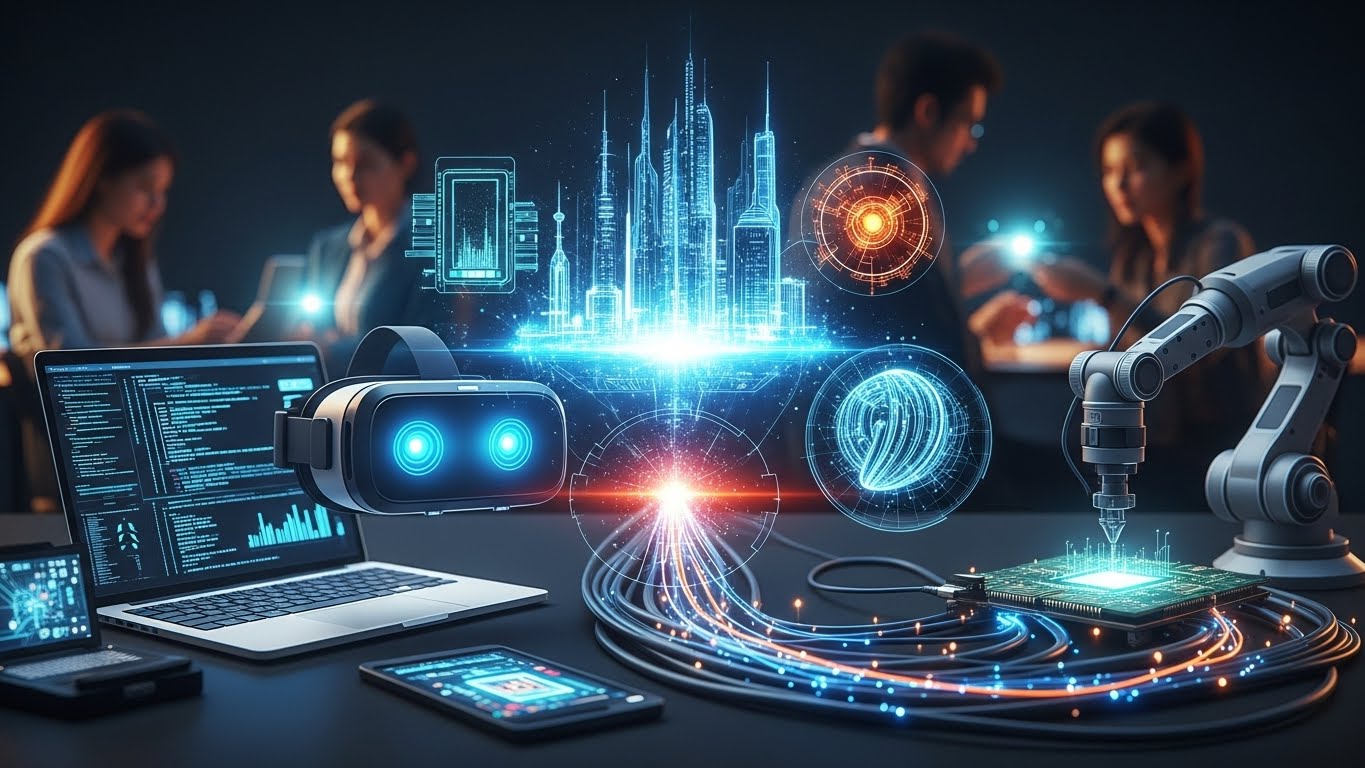

Technology has always been a driving force behind human progress. From the invention of the wheel to the internet, each technological breakthrough has reshaped society in profound ways. Today, we are living in an era where innovation moves faster than ever, touching every aspect of life—from communication and healthcare to education and entertainment. This blog explores the most exciting technological trends shaping our present and future and examines how these innovations are influencing the way we live, work, and interact.
Artificial Intelligence: Transforming the Way We Live
Artificial intelligence, commonly known as AI, has become a cornerstone of modern technology. AI systems have the ability to analyze massive datasets, recognize patterns, and make decisions faster than humans. These capabilities are revolutionizing industries such as healthcare, finance, and customer service.
Machine learning, a key subset of AI, allows computers to learn from data and improve their performance over time without explicit programming. In healthcare, AI algorithms can detect diseases at early stages, predict patient outcomes, and assist in personalized treatment plans. In finance, AI helps detect fraud, analyze market trends, and optimize investment strategies. While AI offers remarkable benefits, it also raises ethical questions around privacy, accountability, and potential job displacement. Balancing innovation with responsibility is essential to ensure AI benefits society as a whole.
Blockchain Technology: Beyond Cryptocurrency
While blockchain is often associated with cryptocurrencies, its applications extend far beyond digital money. At its core, blockchain is a decentralized ledger system that ensures secure, transparent, and immutable record-keeping. This technology is transforming industries such as supply chain management, healthcare, and governance.
In supply chains, blockchain enables companies to trace products from origin to delivery, ensuring authenticity and reducing fraud. In healthcare, patient records can be stored securely, allowing authorized providers to access critical information while maintaining privacy. Even sectors like voting and real estate are exploring blockchain solutions to improve transparency and efficiency. The decentralized nature of blockchain eliminates the need for a central authority, fostering trust and accountability in digital transactions.
The Internet of Things: Connecting the World Around Us
The Internet of Things, or IoT, represents a network of interconnected devices that communicate and share data with each other. Smart homes, wearable fitness trackers, connected vehicles, and industrial sensors are all part of the IoT ecosystem. These devices collect real-time data, automate processes, and provide insights that enhance efficiency and convenience.
In urban environments, IoT enables smart city initiatives. Traffic patterns can be monitored to reduce congestion, energy usage in buildings can be optimized, and public safety systems can respond more effectively to emergencies. In agriculture, IoT devices track soil conditions, weather patterns, and crop health to improve productivity. By connecting everyday objects, IoT is making the world smarter and more responsive to human needs.
Quantum Computing: Unlocking New Possibilities
Quantum computing represents a revolutionary leap forward in computational power. Unlike traditional computers that use bits to process information as zeros or ones, quantum computers use qubits, which can exist in multiple states simultaneously. This property allows them to solve complex problems far faster than classical computers.
Quantum computing has the potential to transform industries such as medicine, logistics, and cryptography. In drug discovery, quantum simulations can model molecular interactions with unprecedented accuracy, speeding up the development of new medicines. In logistics, quantum algorithms can optimize supply chain routes, reducing costs and improving efficiency. While still in its early stages, quantum computing promises to solve problems that were previously considered unsolvable, opening new frontiers in science and technology.
5G Technology: The Backbone of a Connected World
The introduction of 5G networks is more than just faster internet speeds; it represents a shift toward hyperconnectivity. With ultra-low latency, higher bandwidth, and the ability to connect millions of devices simultaneously, 5G is set to revolutionize industries ranging from healthcare to transportation.
In healthcare, 5G enables real-time remote surgeries and telemedicine consultations without delays. In transportation, autonomous vehicles can communicate with each other and with traffic infrastructure to improve safety and efficiency. Additionally, 5G supports the growth of smart cities, where interconnected systems optimize energy, transportation, and public services. By enabling seamless communication between devices, 5G is laying the foundation for a highly connected and automated future.
Sustainable Technology: Innovating Responsibly
As technology advances, sustainability has become a critical focus. Renewable energy solutions, energy-efficient computing, and eco-friendly product designs are shaping a more sustainable future. Companies are increasingly adopting green technologies, from solar-powered data centers to recyclable electronics, reducing environmental impact while driving innovation.
Sustainable technology is not only environmentally responsible but also economically advantageous. Renewable energy sectors, electric vehicles, and energy-efficient solutions are creating new markets and employment opportunities. Consumers are becoming more conscious of their environmental footprint, and businesses that prioritize sustainability are gaining a competitive edge. By embracing sustainability, technology can drive progress while protecting the planet for future generations.
Virtual Reality and Augmented Reality: Redefining Experience
Virtual reality (VR) and augmented reality (AR) are transforming how we interact with digital content. VR immerses users in fully virtual environments, while AR overlays digital elements onto the real world. These technologies are impacting entertainment, education, training, and healthcare in unprecedented ways.
In education and training, VR provides immersive simulations that allow students and professionals to practice skills in a safe environment. In healthcare, AR can assist surgeons with real-time data overlays during procedures, enhancing precision and safety. In entertainment, VR and AR create interactive experiences that engage audiences in ways traditional media cannot. As these technologies evolve, they are blurring the line between the physical and digital worlds, opening new avenues for interaction and engagement.
Cybersecurity: Protecting Our Digital Lives
As technology permeates every aspect of life, cybersecurity becomes increasingly critical. Each connected device, online transaction, and data exchange introduces potential vulnerabilities. Cyberattacks, data breaches, and identity theft are growing concerns in a digitally connected world.
Innovations in cybersecurity, including AI-driven threat detection, biometric authentication, and decentralized security protocols, are helping safeguard sensitive information. Businesses, governments, and individuals must remain vigilant and proactive in addressing security threats. A secure digital environment is essential for maintaining trust and ensuring the safe adoption of emerging technologies.
Ethics in Technology: Balancing Innovation with Responsibility
While technological innovation offers tremendous benefits, it also raises ethical considerations. Issues such as AI bias, data privacy, automation-driven unemployment, and digital surveillance require careful attention. Society must consider questions like: How do we ensure AI systems make fair and unbiased decisions? How do we protect personal data in an increasingly connected world? How do we support workers displaced by automation?
Addressing these questions requires collaboration among technologists, policymakers, ethicists, and society at large. Ethical frameworks and regulations are necessary to guide responsible innovation, ensuring that technology enhances human well-being without causing harm.
The Future of Work: Automation and Collaboration
Automation is reshaping the modern workplace. AI and robotics are taking over repetitive tasks, freeing humans to focus on creativity, problem-solving, and strategic decision-making. While automation increases efficiency and productivity, it also raises questions about employment and workforce adaptation.
The future of work will likely involve collaboration between humans and machines. Humans provide creativity, intuition, and emotional intelligence, while machines offer speed, precision, and data processing capabilities. Reskilling and upskilling workers will be critical to ensure that the workforce can thrive in a technologically advanced environment.
Education in a Tech-Driven World
The rapid pace of technological change demands that education systems evolve. Digital literacy, coding, data analysis, and critical thinking are now essential skills. Lifelong learning is crucial as individuals must continually adapt to new tools, platforms, and innovations.
Educational institutions are increasingly integrating technology into learning, utilizing AI-assisted teaching tools, virtual classrooms, and interactive simulations. Preparing students to navigate a technology-driven world involves more than technical skills; it requires fostering creativity, adaptability, and problem-solving abilities. Education will play a pivotal role in shaping the innovators, leaders, and thinkers of tomorrow.
Conclusion: Embracing the Technological Future
Technology continues to reshape the world at an unprecedented pace. Innovations such as artificial intelligence, blockchain, IoT, quantum computing, 5G, and immersive reality are transforming industries and daily life. At the same time, ethical considerations, sustainability, and cybersecurity challenges must guide responsible development.
By balancing innovation with responsibility, society can harness the full potential of technology to improve quality of life, drive economic growth, and address global challenges. The future is being written now, and the choices we make in embracing and regulating technology will determine the trajectory of human progress.