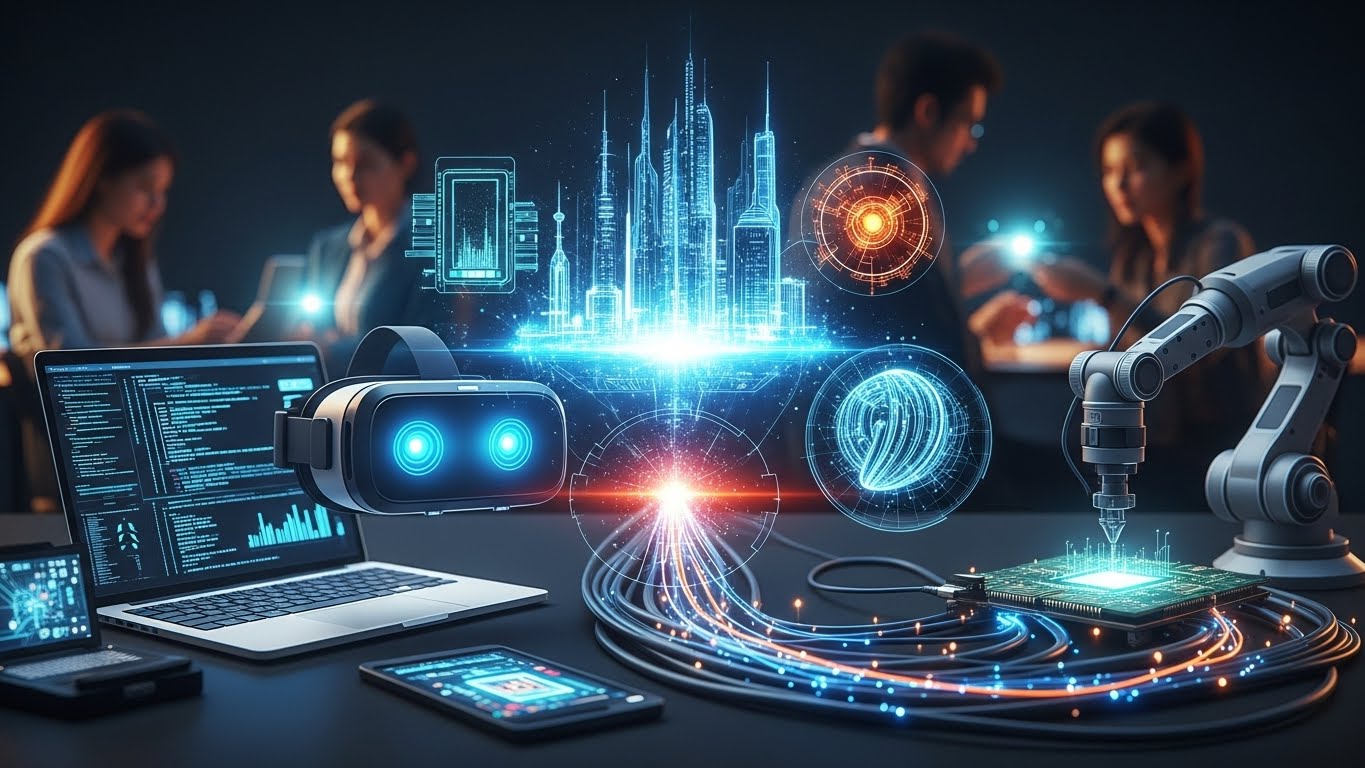

Introduction: Technology’s Unstoppable Impact
Technology has always been a driver of human progress, but the pace of change in recent decades is nothing short of revolutionary. From the rise of the internet to the advent of artificial intelligence (AI), technology is transforming every facet of our lives. It shapes how we work, how we communicate, how we learn, and how we experience entertainment. But what’s most exciting is that we are only scratching the surface of what’s possible. The next wave of innovations promises to bring even more dramatic shifts in the way we live, interact, and grow as a society.
The Age of Artificial Intelligence and Machine Learning
Artificial intelligence has evolved from a niche field of research to a central force in modern technology. Today, AI powers everything from voice assistants like Siri and Alexa to advanced machine learning models that predict everything from shopping habits to medical diagnoses. At its core, AI is about teaching machines to “learn” from data and improve over time. This technology is already in use in industries ranging from healthcare and finance to retail and entertainment.
Machine learning, a subset of AI, is particularly transformative. It allows systems to process large amounts of data and make decisions without explicit programming. For instance, recommendation engines on streaming platforms like Netflix or Spotify use machine learning to suggest content based on your preferences. As AI continues to advance, its potential to drive automation, improve decision-making, and even create new forms of creativity is bound to increase exponentially.
The Evolution of Connectivity: 5G and the Internet of Things
One of the most significant technological shifts in recent years is the expansion of connectivity. The arrival of 5G networks promises to revolutionize how we connect to the internet. With faster speeds and lower latency, 5G will enable more reliable and efficient communication between devices, fostering the growth of the Internet of Things (IoT). IoT refers to the network of physical objects that are connected to the internet, from home appliances and wearables to cars and industrial machinery.
Imagine a world where your refrigerator alerts you when you’re low on milk, your car drives you to work without you having to steer, and your city’s traffic lights are optimized in real-time to reduce congestion. That’s the power of IoT, and with 5G’s increased capacity, these connected devices can work in harmony, opening up possibilities for smarter homes, cities, and businesses.
Blockchain: Revolutionizing Trust and Security
Blockchain is one of the most buzzed-about technologies of the past decade, and for good reason. It provides a secure, transparent, and decentralized way to store and transfer data. At its most well-known, blockchain is the backbone of cryptocurrencies like Bitcoin, but its potential extends far beyond digital currency.
Blockchain can be used to secure transactions in fields like banking, healthcare, and supply chain management. It offers a way to verify and record transactions without the need for a central authority, making systems more transparent and reducing fraud. In the world of business, blockchain could streamline processes, increase efficiency, and create new forms of trust between organizations and consumers.
Augmented Reality and Virtual Reality: Redefining Interaction
Augmented reality (AR) and virtual reality (VR) are two technologies that are quickly gaining traction, both in entertainment and in other fields. AR overlays digital information onto the real world, enhancing the way we experience our surroundings. A well-known example is Pokémon Go, which brought AR to the masses by allowing players to catch virtual Pokémon in real-world locations.
On the other hand, VR provides fully immersive experiences by creating entirely virtual environments. VR is already making waves in gaming, allowing players to step inside digital worlds and interact with them in real-time. But the applications of VR go far beyond entertainment. In fields like healthcare, VR is being used for training, therapy, and even surgery simulations. Similarly, AR is being adopted in industries like retail and education, where it can enhance customer experiences or provide immersive learning environments.
The Green Tech Revolution: Sustainability and Innovation
As concerns about climate change and resource depletion continue to rise, technology is playing an increasingly important role in creating sustainable solutions. Renewable energy technologies, like solar and wind power, have seen significant advancements, making them more cost-effective and accessible. Battery technology is also improving, helping to store energy more efficiently for use when the sun isn’t shining or the wind isn’t blowing.
In addition to energy, tech is also helping reduce waste and increase sustainability in other areas. For instance, electric vehicles (EVs) are gradually replacing gasoline-powered cars, and innovations in recycling technology are helping to reduce the environmental impact of waste. Sustainable tech is also enabling businesses to track their carbon footprints and develop more eco-friendly practices, paving the way for a greener future.
The Rise of Automation: Changing Work and Life
One of the most profound ways technology is impacting society is through automation. From manufacturing robots to self-checkout systems in supermarkets, automation is reducing the need for human intervention in many processes. In the workplace, AI and robotics are increasingly taking over repetitive or dangerous tasks, allowing workers to focus on more complex or creative activities.
While automation presents significant opportunities for increased efficiency and innovation, it also raises questions about the future of work. As machines take over more jobs, the challenge will be to ensure that workers are trained for new roles and that society adapts to these changes. Education and reskilling will be crucial in helping workers transition into industries that require human creativity, emotional intelligence, and complex problem-solving.
The Future of Tech: What’s Next?
Looking ahead, the future of technology is both thrilling and unpredictable. We are likely to see the rise of even more intelligent and capable AI systems that can perform tasks once thought to be exclusive to humans. Quantum computing, which harnesses the principles of quantum mechanics, promises to revolutionize fields like cryptography, data analysis, and complex simulations.
At the same time, we can expect to see even more seamless integration between the physical and digital worlds. Technologies like IoT, AR, and VR will continue to evolve, creating new experiences that blur the lines between what is real and what is virtual. And with innovations in biotechnology and healthcare, we may see breakthroughs that significantly extend human life and improve quality of living.
Conclusion: Embracing the Tech-Driven Future
The world of technology is evolving faster than ever before, and its impact on society is undeniable. From artificial intelligence to green tech and beyond, innovation is driving positive change and opening up new possibilities for the future. However, with these advancements come challenges that will need to be addressed thoughtfully, such as privacy concerns, the future of work, and ensuring equitable access to technology.
As we embrace these changes, it’s essential that we remain mindful of the broader implications of these innovations, ensuring that technology is harnessed for the greater good. The future is undoubtedly exciting, but it will require a balanced approach to ensure that these advancements benefit everyone, not just a select few.