Introduction
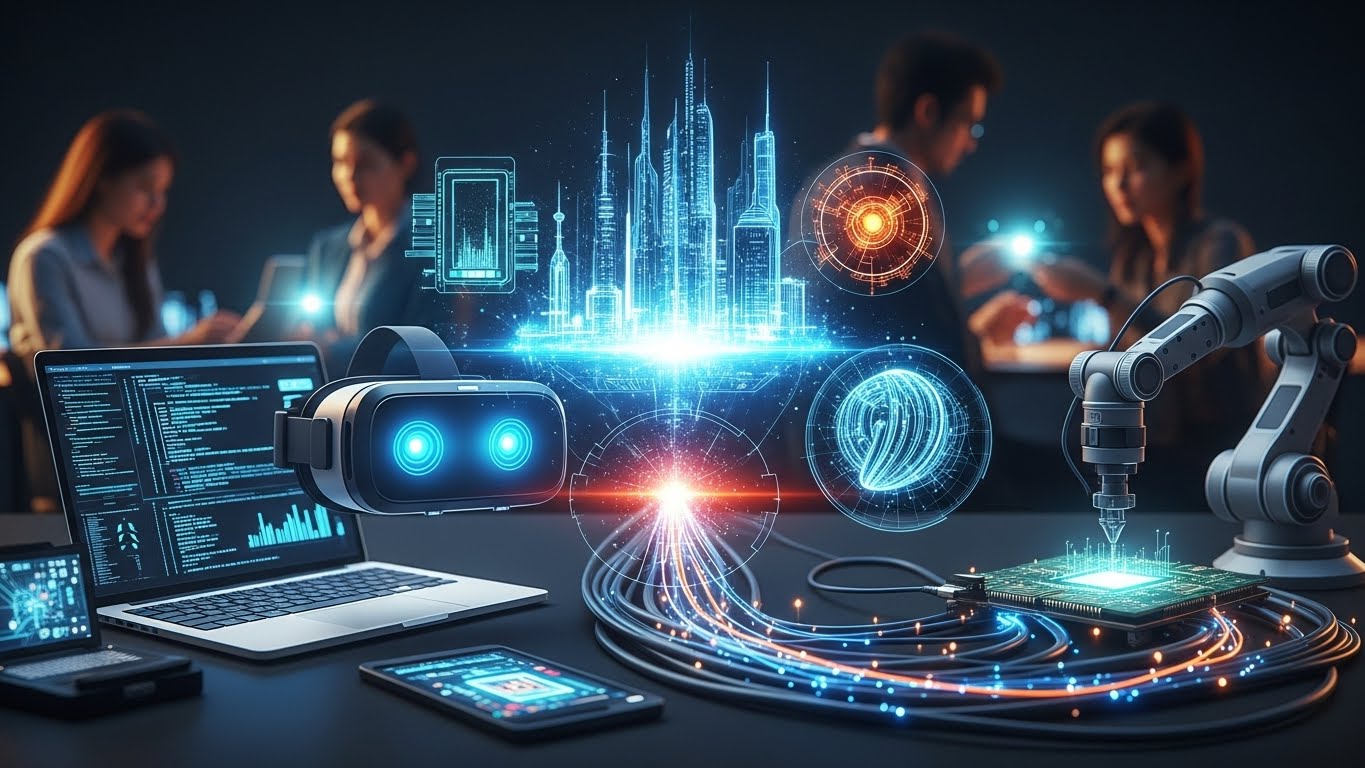
Technology is the heartbeat of the modern era, the invisible thread that connects the world, and the driving force behind almost every aspect of human progress. From the way we communicate to the way we heal, learn, travel, and even think, technology has redefined what it means to live in the twenty-first century. Every generation experiences its own wave of innovation, but the pace of change today is unprecedented. What was once science fiction has become part of daily life. We carry powerful computers in our pockets, send data across the planet in seconds, and interact with machines that can learn from experience.
This constant evolution of technology has reshaped not only industries but also human identity and culture. It has given rise to opportunities for growth, creativity, and connection that were unimaginable a few decades ago. Yet it also raises questions about ethics, privacy, and the role of humanity in an increasingly automated world. The story of technology is a story of curiosity and courage—of people daring to dream beyond their limitations.
In this blog, we will explore the vast world of technology, its origins, its transformative influence, and its limitless future. The goal is to understand not only how technology changes the world but also how it changes us as human beings.
The Foundations of Human Innovation
The story of technology begins at the dawn of humanity. The first spark of innovation came when early humans crafted tools from stone to hunt and survive. Those simple tools represented a turning point in evolution, giving humans the ability to shape their environment rather than adapt to it. The mastery of fire, the creation of the wheel, and the invention of writing systems were among the earliest technological revolutions that laid the groundwork for civilization.
As societies grew, so did their need for innovation. The ancient Egyptians engineered monumental pyramids with remarkable precision. The Greeks developed early mechanical devices like the Antikythera mechanism, while the Chinese invented paper, the compass, and gunpowder—technologies that would later change the world. These early achievements were rooted in the human desire to explore, to improve, and to connect.
Every tool, every invention, was a bridge between imagination and reality. Technology has always been about extending human potential—turning ideas into instruments of progress.
The Industrial Age and Mechanization of the World
The Industrial Revolution, beginning in the late eighteenth century, marked one of the greatest transformations in human history. Machines powered by steam and electricity replaced manual labor, giving rise to factories, railways, and global trade. For the first time, technology wasn’t just improving individual lives—it was reshaping entire societies.
The steam engine, spinning jenny, and telegraph accelerated production and communication. The world became smaller, more connected, and more dynamic. With industrialization came urbanization. People moved from farms to factories, and economies shifted from agriculture to manufacturing. This was also when the concept of innovation as an engine of progress truly took root.
The Industrial Age laid the foundation for modern technology. It was during this time that the seeds of automation, electricity, and transportation were sown. These technologies did not simply make life easier—they expanded human possibilities, setting the stage for the digital age.
The Birth of the Digital Era
The twentieth century ushered in the Digital Revolution, an era that transformed the world at a speed no previous generation had experienced. The invention of the computer marked the beginning of a new technological age. Early machines, once massive and complex, evolved into personal computers that brought computing power to homes and businesses.
Then came the internet—a force so powerful it reshaped the global landscape of communication, commerce, and culture. The ability to share information instantly changed how societies functioned. Knowledge, once locked in books and libraries, became accessible to anyone with an internet connection.
The Digital Age also introduced new industries, from software development to e-commerce, while transforming traditional sectors such as education, medicine, and entertainment. It connected people across continents and blurred the line between local and global communities. Technology was no longer just a tool; it became an extension of human intelligence.
Artificial Intelligence and the Rise of Machine Learning
Artificial Intelligence (AI) represents one of the most groundbreaking achievements in modern technology. It allows machines to mimic human reasoning, learn from data, and make decisions. From simple algorithms to advanced neural networks, AI has evolved into a force that touches every industry and every individual.
Machine learning, a key branch of AI, gives systems the ability to improve over time without explicit programming. It enables voice assistants to understand speech, recommendation systems to predict preferences, and medical software to detect diseases earlier than human doctors.
AI has also changed how we interact with technology. Smart homes, autonomous vehicles, and predictive analytics have made everyday life more efficient and personalized. In the business world, AI drives innovation by optimizing operations, analyzing market trends, and enhancing customer experiences.
However, with great power comes great responsibility. The rise of AI raises ethical concerns about job automation, data privacy, and the future of human employment. It also challenges us to redefine creativity and intelligence in a world where machines can compose music, paint, and write code.
The Internet of Things and a Connected World
The Internet of Things (IoT) has taken connectivity to a new dimension. It connects physical devices—ranging from kitchen appliances to industrial machinery—to the internet, allowing them to collect and share data. IoT turns ordinary objects into smart systems that communicate and adapt in real time.
In homes, IoT enables security systems that monitor activities, lights that adjust automatically, and thermostats that learn user preferences. In healthcare, wearable devices track heart rates, sleep patterns, and fitness levels, giving people greater control over their well-being. In industries, IoT powers predictive maintenance, energy management, and logistics optimization.
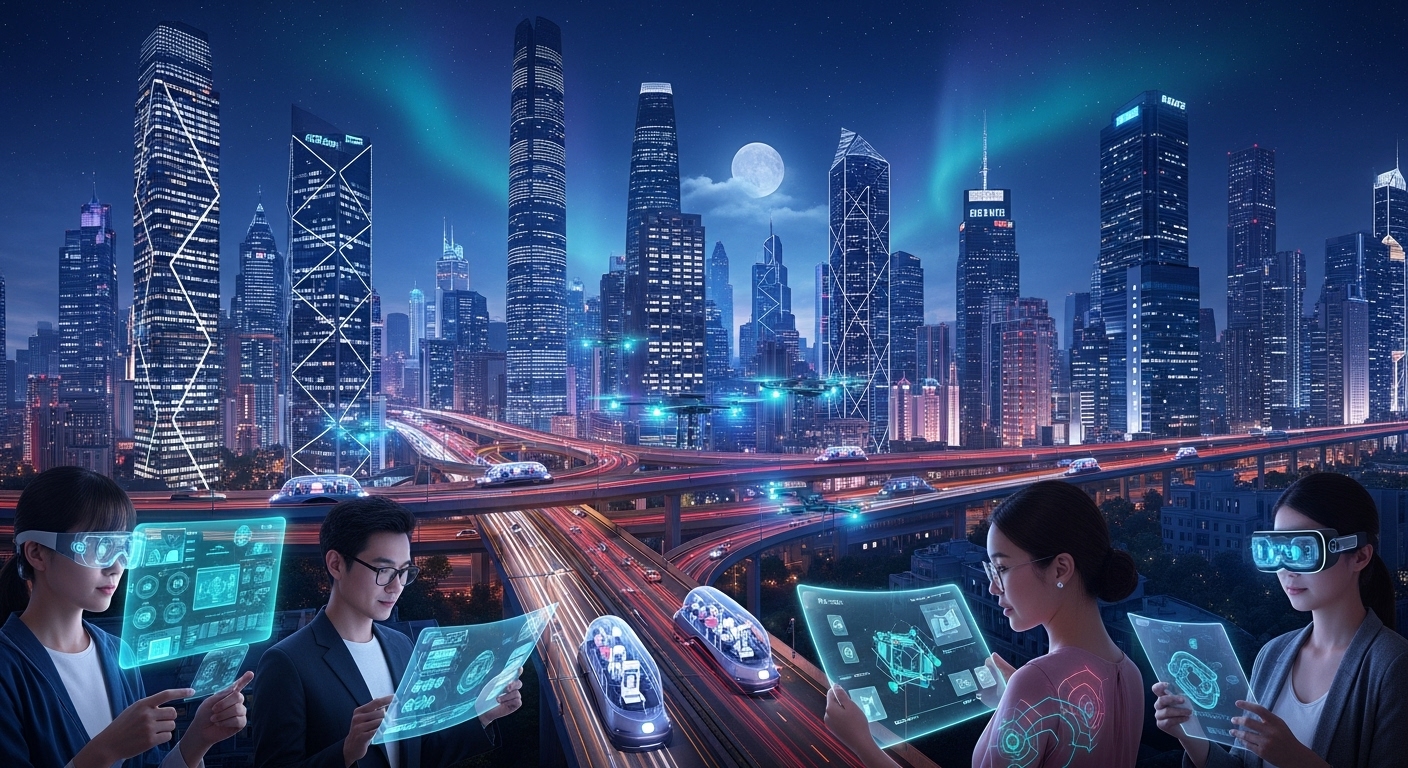
Cities are also becoming smarter through IoT. Intelligent traffic systems reduce congestion, sensors detect pollution levels, and connected infrastructure improves public safety. The result is a world where data drives decision-making and efficiency.
Cloud Computing and the Data Revolution
The rise of cloud computing has changed the way data is stored and accessed. Instead of relying on local servers or hard drives, individuals and businesses can store information in the cloud—remote servers accessible through the internet. This technology has revolutionized collaboration, scalability, and security.
For businesses, cloud computing reduces costs and increases flexibility. It allows companies to scale resources based on demand and supports remote work on a global scale. For individuals, it provides access to information and services from any device, anywhere in the world.
Alongside cloud computing, Big Data has emerged as one of the most powerful forces in modern technology. Every second, vast amounts of data are generated from digital interactions, sensors, and devices. When analyzed, this data reveals insights that drive innovation in fields like healthcare, finance, education, and marketing.
However, managing and protecting this data remains a challenge. As the world becomes more data-driven, ensuring privacy and security has become a top priority.
Automation and Robotics
Automation and robotics have redefined efficiency across industries. Robots no longer exist only in factories—they are found in hospitals, restaurants, and even homes. Automation handles repetitive and dangerous tasks, freeing humans to focus on creativity and problem-solving.
In manufacturing, robotic systems assemble products with unmatched precision. In logistics, autonomous drones and vehicles optimize delivery networks. In medicine, surgical robots assist doctors in performing complex procedures.
The integration of robotics and AI has led to the development of intelligent machines capable of learning and adapting. While automation raises concerns about job displacement, it also creates new opportunities for innovation, efficiency, and economic growth.
Renewable Energy and Green Innovation
Technology is also driving the transition toward a sustainable future. Renewable energy sources like solar, wind, and hydropower are replacing fossil fuels. Innovations in battery storage, smart grids, and electric vehicles are making clean energy more practical and affordable.
Smart buildings and cities are designed with energy efficiency in mind, reducing carbon footprints and conserving resources. Advances in biotechnology are creating eco-friendly materials and sustainable agricultural practices.
The fusion of technology and sustainability is not just about saving the planet—it is about ensuring a future where progress and responsibility coexist. Green technology proves that innovation can be both profitable and ethical.
Cybersecurity and Digital Protection
In an age of digital connectivity, cybersecurity is essential. As more aspects of life move online, the risks of hacking, fraud, and data theft increase. Cybersecurity protects individuals, organizations, and governments from these threats.
Advanced encryption, biometric authentication, and AI-based defense systems have become critical tools in safeguarding information. Cybersecurity is not just about technology—it is about trust. In a world driven by data, maintaining security ensures the stability of economies, institutions, and societies.
The Future of Technology
The next frontier of technology lies in innovations like quantum computing, biotechnology, and space exploration. Quantum computing promises to process information at speeds unimaginable to classical computers, potentially solving problems in seconds that would take traditional systems centuries.
Biotechnology is merging with digital innovation to revolutionize healthcare, agriculture, and genetics. Scientists are now able to map genomes, develop personalized medicine, and even create lab-grown organs. Meanwhile, space technology is expanding humanity’s reach beyond Earth, with reusable rockets and lunar missions paving the way for interplanetary exploration.
The convergence of these technologies will create an interconnected ecosystem where science, creativity, and ethics shape the direction of human evolution.
Conclusion
Technology is more than machinery or algorithms—it is the story of human ambition. From the first fire lit in prehistoric caves to the quantum computers of tomorrow, every innovation reflects our relentless drive to improve, to understand, and to connect.
The future of technology will not just depend on what we create, but on how we use it. It will require wisdom, compassion, and responsibility. As we stand on the edge of new possibilities, we must ensure that technology serves humanity rather than replaces it.
The evolution of technology is an unending journey—a journey that defines our past, shapes our present, and builds the foundation of our future. And while no one can predict exactly what lies ahead, one thing is certain: the power of innovation will continue to guide humanity toward a brighter, smarter, and more connected world.