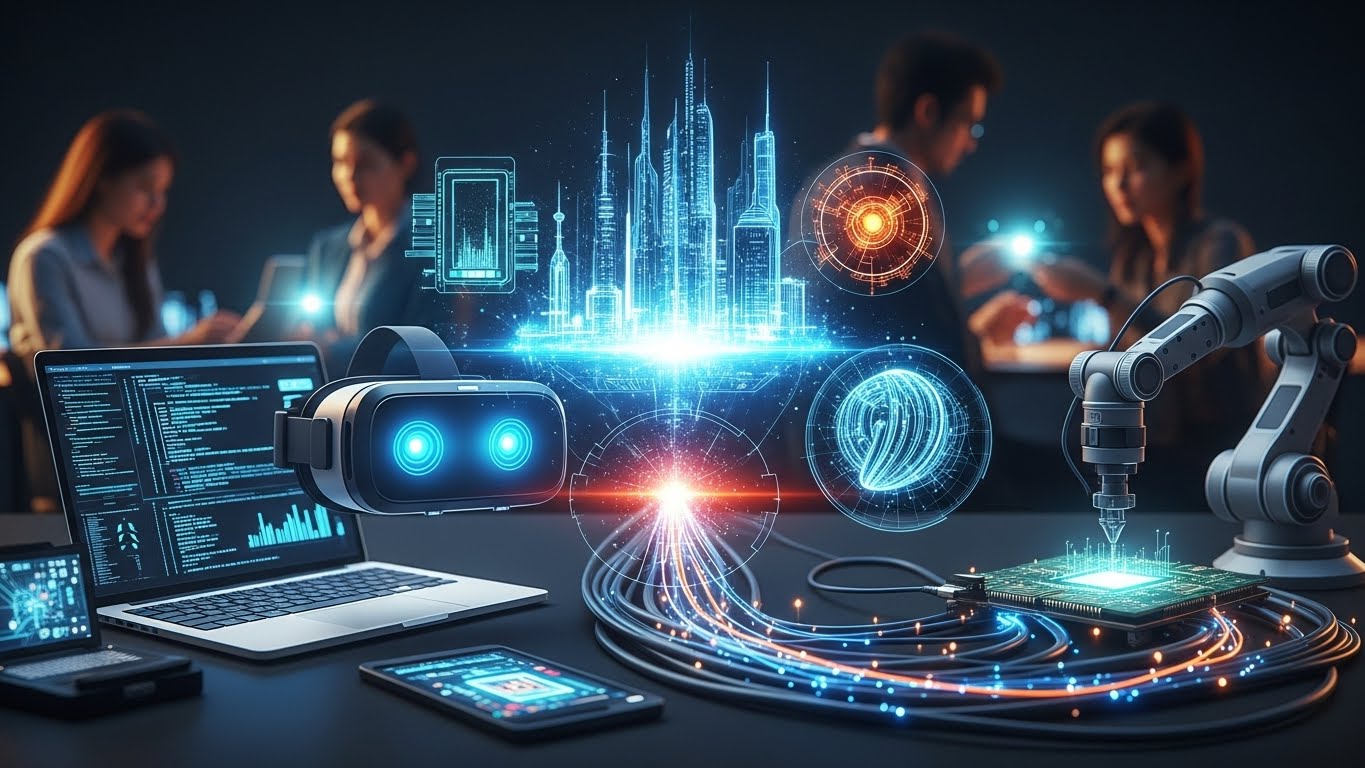
Technology has always been a driving force behind human progress. From the invention of the wheel to the creation of the internet, each breakthrough has fundamentally altered the way we live, work, and interact with the world. In today’s era, technology is advancing at an unprecedented rate, influencing every aspect of our lives, from healthcare and education to entertainment and communication. This blog post explores the evolution of technology, current trends, and the potential future impacts on society.
Early Innovations: Laying the Foundation
The story of technology begins thousands of years ago with simple tools and inventions that addressed immediate human needs. Early humans developed stone tools for hunting and agriculture, enabling survival and the establishment of early communities. The discovery of fire marked a critical milestone, providing warmth, protection, and a means to cook food.
The invention of the wheel revolutionized transportation and trade, while the development of writing systems allowed humans to record knowledge and communicate across generations. These innovations, though primitive by modern standards, laid the foundation for future technological advancements.
The Industrial Revolution: Mechanization and Transformation
The Industrial Revolution, which began in the late 18th century, marked a turning point in human history. This period introduced machines that could perform tasks faster and more efficiently than manual labor. The steam engine, textile machinery, and mechanized manufacturing processes transformed industries, leading to urbanization and economic growth.
Communication technologies also began to evolve. The telegraph allowed messages to travel long distances almost instantaneously, shrinking the world and paving the way for global connectivity. The industrial age not only enhanced productivity but also created new societal challenges, including labor exploitation and environmental degradation, issues that technology continues to address today.
The Digital Revolution: Computers and the Internet
The 20th century ushered in the digital revolution, a period characterized by the development of computers, semiconductors, and digital communication systems. Early computers were massive machines, accessible only to governments and large corporations. Over time, computers became smaller, faster, and more affordable, making them integral to business, education, and personal life.
The invention of the internet in the late 20th century redefined communication and information sharing. For the first time, people could connect globally in real-time, access vast amounts of information, and create digital communities. Email replaced traditional letters, online commerce transformed shopping habits, and digital media began to reshape entertainment.
Mobile Technology: Connectivity in Our Hands
The advent of mobile technology marked another significant shift in how we interact with the world. Smartphones, which combine computing power, internet access, and multimedia capabilities, have become essential tools for modern life. Mobile applications now cater to almost every need, from navigation and finance to health monitoring and social interaction.
Mobile technology has also democratized information, enabling people to learn, work, and communicate from virtually anywhere. The proliferation of high-speed internet and 5G networks has further accelerated this trend, supporting real-time video streaming, online gaming, and advanced communication platforms.
Artificial Intelligence: The Rise of Intelligent Machines
Artificial intelligence (AI) represents one of the most transformative technological advancements of the 21st century. AI systems can analyze vast datasets, recognize patterns, and make decisions with minimal human intervention. Machine learning, a subset of AI, allows systems to improve performance over time based on experience.
AI is being applied in numerous fields, including healthcare, where it assists in diagnostics and personalized treatment; finance, where it detects fraud and predicts market trends; and transportation, where autonomous vehicles are beginning to reshape mobility. AI-powered tools are also enhancing creativity, enabling new forms of art, music, and writing.
Robotics: Redefining Work and Industry
Robotics technology complements AI by enabling machines to perform physical tasks with precision and efficiency. Modern robots are used in manufacturing, logistics, agriculture, and even healthcare. In factories, robots handle repetitive or dangerous tasks, increasing productivity and reducing human risk. In medicine, robotic surgery allows for minimally invasive procedures, improving outcomes and reducing recovery times.
The integration of robotics and AI is also leading to innovations such as autonomous delivery systems and robotic assistants. As technology evolves, robots may become commonplace in homes, performing chores, providing companionship, and supporting individuals with disabilities.
Virtual Reality and Augmented Reality: Immersive Experiences
Virtual reality (VR) and augmented reality (AR) are revolutionizing how we experience digital content. VR immerses users in entirely digital environments, while AR overlays digital information onto the real world. These technologies are transforming gaming, education, healthcare, and training.
In education, VR and AR provide interactive learning experiences that make complex concepts easier to understand. In healthcare, they assist in surgical training and patient rehabilitation. In entertainment and tourism, they create immersive experiences that were previously unimaginable. As hardware becomes more affordable and content more sophisticated, the adoption of VR and AR is expected to expand further.
Blockchain and Cryptocurrencies: Redefining Finance
Blockchain technology, which underpins cryptocurrencies like Bitcoin, is redefining the concepts of trust, security, and transparency in digital transactions. A blockchain is a decentralized ledger that records transactions across a network of computers, making it resistant to tampering and fraud.
Beyond cryptocurrencies, blockchain is being used in supply chain management, healthcare, voting systems, and digital identity verification. By providing a secure, transparent, and efficient way to record and transfer data, blockchain has the potential to disrupt traditional industries and create new economic models.
The Internet of Things: Connecting Everything
The Internet of Things (IoT) refers to a network of interconnected devices that communicate and exchange data. IoT-enabled devices include smart home appliances, wearable fitness trackers, industrial sensors, and connected vehicles. These devices provide real-time insights, automate tasks, and improve efficiency.
In smart cities, IoT technology optimizes traffic flow, energy consumption, and public safety. In agriculture, sensors monitor soil conditions and crop health, enhancing productivity and sustainability. As the number of connected devices grows, IoT will play an increasingly critical role in shaping our daily lives and the infrastructure of the future.
Cybersecurity: Protecting the Digital World
As technology becomes more integrated into every aspect of society, cybersecurity has emerged as a vital concern. Cyberattacks, data breaches, and identity theft pose significant risks to individuals, businesses, and governments. Protecting digital assets requires robust security measures, including encryption, multi-factor authentication, and continuous monitoring.
Cybersecurity is not just a technical challenge but also a social one. Educating users about safe practices, implementing regulatory frameworks, and fostering international cooperation are essential components of a secure digital ecosystem. As cyber threats evolve, the need for innovative and adaptive security solutions will continue to grow.
Green Technology: Sustainable Innovation
With growing awareness of climate change and environmental degradation, green technology is gaining prominence. Renewable energy sources, energy-efficient devices, and sustainable manufacturing processes are examples of innovations aimed at reducing environmental impact.
Solar panels, wind turbines, and electric vehicles are reshaping the energy landscape, while smart grids and energy storage solutions optimize resource utilization. Green technology not only addresses environmental challenges but also drives economic growth and creates new opportunities for innovation and entrepreneurship.
Biotechnology: Merging Technology and Biology
Biotechnology represents the intersection of technology and biology, with profound implications for healthcare, agriculture, and environmental management. Advances in genetic engineering, synthetic biology, and bioinformatics are enabling scientists to develop new treatments, improve crop yields, and address ecological challenges.
In medicine, biotechnology facilitates personalized therapies, regenerative medicine, and advanced diagnostics. In agriculture, genetically modified crops offer resistance to pests and environmental stressors. As biotechnology continues to advance, ethical considerations and regulatory frameworks will play a crucial role in shaping its applications.
The Future of Technology: Emerging Trends
Looking ahead, several emerging technologies promise to further transform society. Quantum computing, which leverages the principles of quantum mechanics, has the potential to solve problems that are currently intractable for classical computers. Advanced AI systems may achieve unprecedented levels of autonomy and creativity. Space technology and exploration may unlock new resources and opportunities beyond Earth.
Additionally, the convergence of multiple technologies, such as AI, IoT, and biotechnology, will create complex, intelligent systems that blur the lines between the physical and digital worlds. These innovations will redefine work, communication, and even human identity, raising both exciting possibilities and ethical questions.
Ethical Considerations in Technology
As technology advances, ethical considerations become increasingly important. Issues such as privacy, surveillance, algorithmic bias, and the social impact of automation require careful thought and regulation. Ensuring that technology serves humanity rather than exploiting it is a responsibility shared by developers, policymakers, and society as a whole.
Transparent decision-making, inclusive design, and ethical frameworks are essential for guiding technological development. Balancing innovation with social responsibility will determine whether technology becomes a force for empowerment or exacerbates inequality.
Technology and Society: A Symbiotic Relationship
Technology and society are intertwined, influencing and shaping each other. Social needs drive technological innovation, while technology, in turn, reshapes social structures, cultural practices, and economic systems. The smartphone, social media, and streaming platforms have fundamentally altered how we communicate, consume information, and entertain ourselves.
Education, work, healthcare, and governance are also being transformed by digital tools. Online learning platforms, telemedicine, and e-governance systems expand access and efficiency. However, the rapid pace of change also presents challenges, including digital addiction, misinformation, and socio-economic disparities. Society must adapt to leverage the benefits of technology while mitigating its risks.
Conclusion: Embracing the Technological Future
Technology has come a long way, from simple tools to complex systems that shape our daily lives. Its evolution reflects humanity’s curiosity, creativity, and desire to overcome challenges. Today, we stand on the cusp of a new era where artificial intelligence, biotechnology, quantum computing, and other innovations promise to redefine what is possible.
Embracing technology responsibly requires foresight, ethical consideration, and a commitment to inclusivity. By understanding its history, appreciating its potential, and addressing its challenges, we can harness technology to build a more connected, sustainable, and equitable future. The journey of innovation continues, and the possibilities are limited only by imagination, ingenuity, and our willingness to explore uncharted frontiers.